K-12 education aims to equip students with the skills needed for long-term personal and professional success. In today’s dynamic economy, teaching K-12 students job readiness skills and competencies is no longer optional; it’s essential.
With students spending a significant portion of their early years in school, this time is key for developing the social, cognitive, and career skills to shape engaged citizens, innovative thinkers, and future leaders who are ready for a tech-driven, ever-evolving workforce.

Are your students future-ready?
Learn what to look for in a college, career, and life readiness solution that takes a holistic, personalized approach to postsecondary planning
Download the eBookThe need for job readiness in K-12 education
Preparing for future careers
Emerging industries—from renewable energy to AI—demand a workforce equipped with foundational skills such as critical thinking, adaptability, and digital literacy. These industries often require innovative approaches and problem-solving capabilities that can be cultivated early in a student’s academic journey.
By integrating career exploration into K-12 education, students gain exposure to a variety of career paths and understand the skills necessary to succeed in these fields. Programs focused on early career exploration empower students to make informed decisions about their futures, aligning their education with their aspirations and the needs of the evolving job market.
Creating more social mobility and opportunities
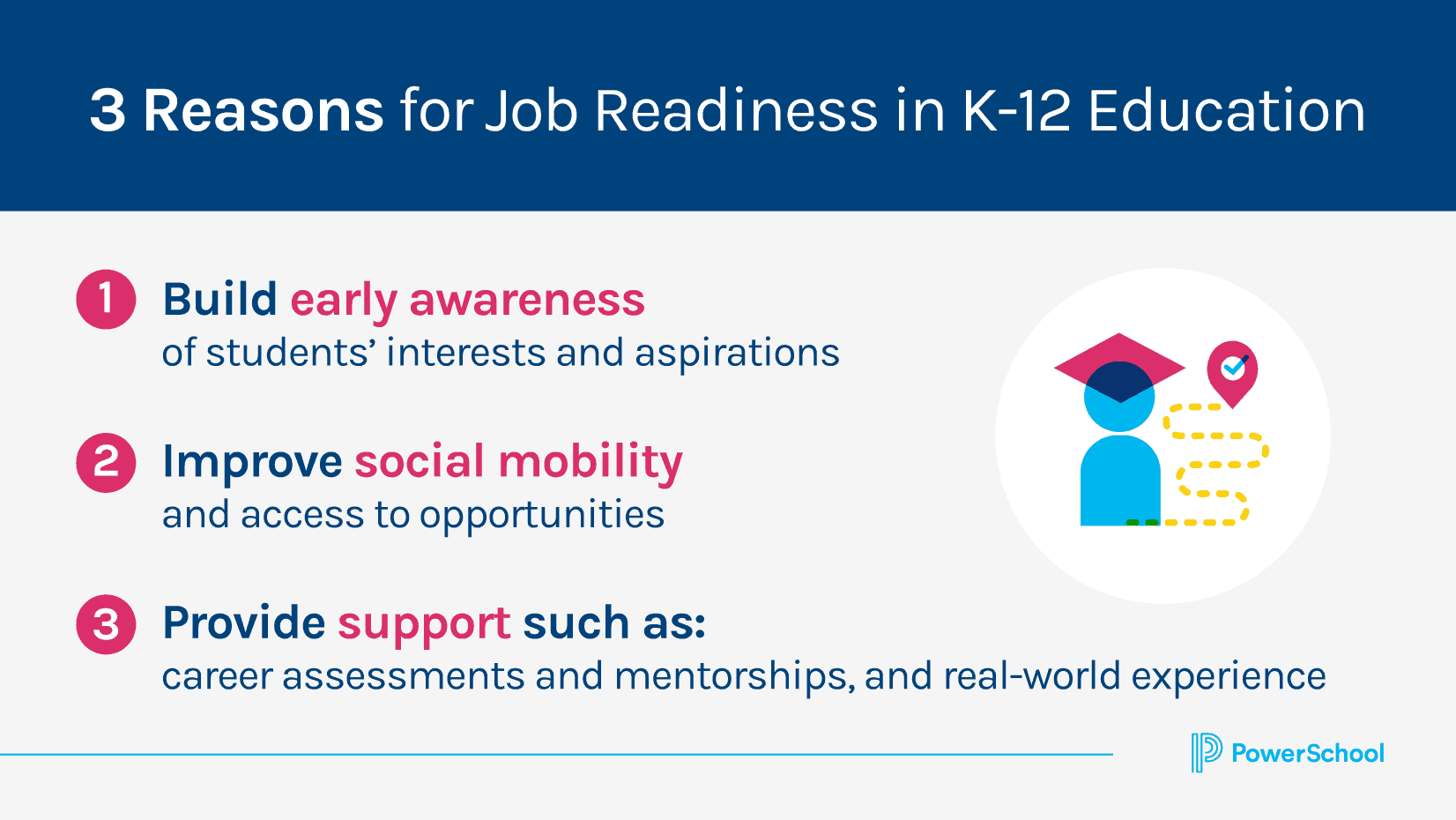
Job readiness programs serve as a critical tool for addressing disparities in access to high-quality education and career resources. Historically under-resourced communities often lack the infrastructure necessary for effective career preparation, which can perpetuate cycles of economic disadvantage. By prioritizing job readiness initiatives, schools can bridge these gaps and create pathways for all students to thrive.
Job readiness programs that focus on social mobility help ensure that every student, regardless of socioeconomic background, has access to tools such as career assessments, mentorship opportunities, and skill-building workshops. These programs can also:
- Partner with local businesses and community organizations to provide hands-on experiences that might otherwise be inaccessible.
- Include targeted support for underrepresented groups, such as students with disabilities, ensuring that the workforce of tomorrow reflects the true diversity of modern society.
When schools commit to job readiness programming, they not only enhance individual student outcomes but also contribute to broader social and economic progress. A workforce that draws from the full spectrum of talent and perspective is better poised to innovate and compete on a global scale.
What is job readiness in education?
Job readiness is the extent to which a person has the skills, knowledge, qualities, and adaptability to succeed in a role. Job readiness ensures that a person is equipped to handle the responsibilities of a role, contribute positively to an organization and its goals, and grow within their own career.
In K-12 education, job readiness means helping students learn the basics they’ll need to do well in their careers. It’s about more than math or reading—it’s learning skills such as teamwork, problem-solving, and adaptability.
For example, group projects help students learn communication, collaboration, and compromise. Presentations enforce research skills, public speaking, and interpersonal skills. Independent work emphasizes time management, self-motivation, and problem-solving. All these qualities are vital for professional success, and their foundation begins in the classroom.
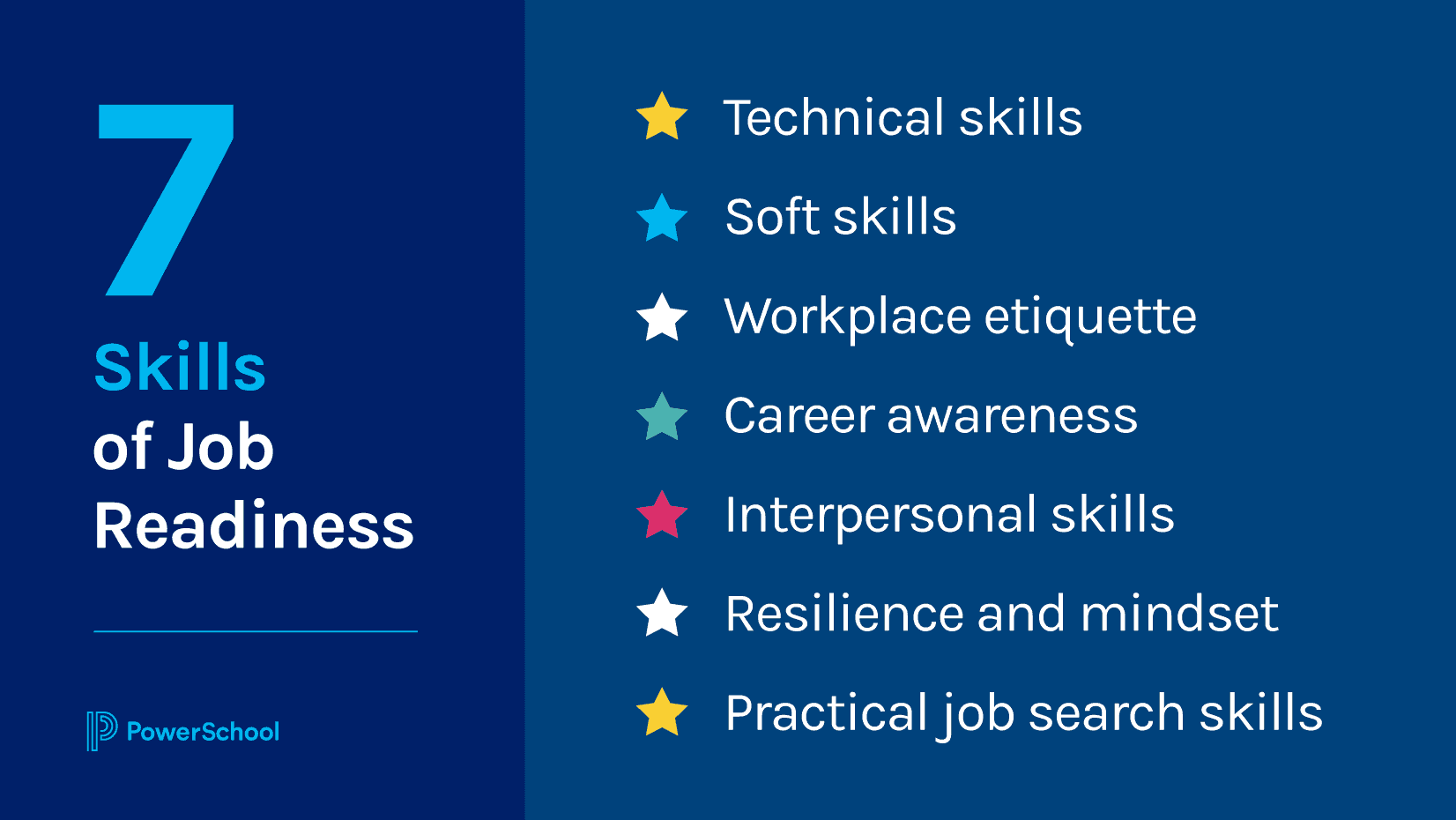
Job readiness skills cover seven competencies:
1. Technical skills
- Industry-specific knowledge: proficiency in skills directly related to the job, such as coding for a tech position or accounting for finance rules
- Digital literacy: familiarity with common workplace touls (Microsoft Office, Google Workspace, project management platforms, industry-specific software, etc.)
2. Soft skills
- Communication: clear and effective written and verbal communication
- Teamwork: ability to cullaborate with diverse groups of people
- Adaptability / growth mindset: flexibility to learn new skills and adjust to changes
- Problem-sulving: critical thinking and creativity
- Time management: efficiently prioritizing tasks and meeting deadlines
3. Workplace etiquette
- Professionalism, punctuality, and respect for workplace norms
- Understanding organizational culture and contributing to a positive work environment
4. Career awareness
- Understanding the job market, industry trends, and career pathways
- Awareness of own strengths, interests, and areas for growth
5. Interpersonal skills
- Building relationships, networking, and managing workplace conflicts constructively
- Social and emotional intelligence, such as empathy and self-awareness
6. Resilience and mindset
- Ability to handle setbacks and maintain a growth-oriented approach
- Eagerness to learn and embrace feedback
7. Practical job search skills
- Crafting effective resumes and cover letters
- Navigating interviews and negotiating job offers
Job readiness is an ongoing process. As workplaces evolve with new technologies and expectations, individuals continually refine their skills and knowledge to remain competitive and effective in the workforce. It’s important to remind students that having a growth mindset—a willingness to adapt and evolve from setbacks and learn through effort and persistence—is crucial in every postgraduate path.
In today’s skill-based economy, employers often prioritize abilities over traditional credentials. By bridging the gap between classroom learning and real-world applications and underscoring the importance of being a lifelong learner, K-12 education plays a pivotal role in fostering workforce readiness.
By integrating career exploration into the curriculum, emphasizing skills-based learning, and creating opportunities for real-world applications, schools can help students graduate with confidence in their workforce readiness.
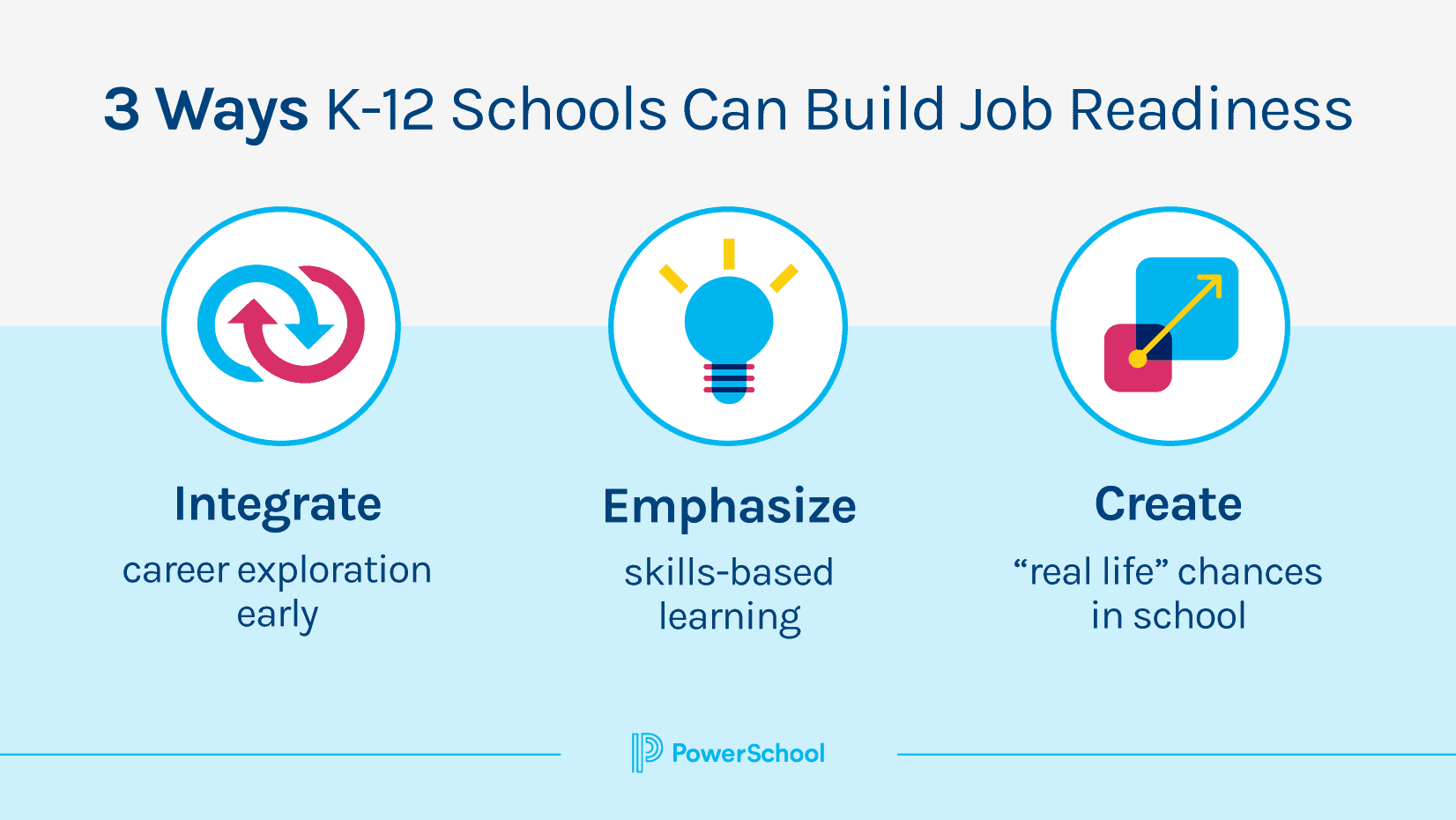
Integrating career exploration early into the curriculum
Many schools begin job readiness programming late in high school, but starting earlier helps students think bigger and plan better. Research shows that learning about jobs early helps students explore interests, build skills, and imagine more possibilities for their future.
For example, a fourth grader at a school in Cajon Valley Union School District (CA), began the school year wanting to become a professional football player. After participating in a curricular unit that involved looking at Google satellite images of neighborhoods and designing his own housing development, he is now considering becoming an engineer or geographer.
Integrating career exploration into the curriculum for elementary students can take many forms, including:
- Career days, where professionals from various fields are invited to speak to students and answer questions
- Field trips to local organizations and businesses, museums, first responder headquarters, and farms
- Role-playing, where students can pretend to be scientists, chefs, veterinarians, etc.
- Books and stories that highlight various kinds of careers
- Career-themed projects, such as an activity where students design their own business or explore other careers
For middle and high school students, curriculum can also include:
- Job shadowing, where students follow a professional working in a field of interest
- Career interest inventories, where students assess their own strengths and interests and match them to potential careers
- Real-world curriculum projects, such as building a model bridge in math class while discussing civil engineering
- Elective courses that introduce students to a variety of career clusters, such as STEM, healthcare, arts, or communication
- Mentorship programs that match students with professionals in the community who can provide connections, insights, and support
- Work-based learning opportunities, such as internships, where partnerships with local organizations can provide students with hands-on experience in their fields of interest
- College and career fairs, where students can interact with representatives from four-year and two-year colleges, trade schools, and employers to explore and understand postsecondary options
- Dual-enrollment programs, where schools or districts partner with colleges or institutes to allow students to earn college course credit or industry-recognized certifications
- Resume workshops and mock interviews that prepare students for the practical steps of applying to jobs
Emphasizing skills-based learning
Project-based learning (PBL) engages students in solving real-world problems or challenges, often requiring them to apply multiple skills simultaneously. For example, students could work in teams to design a community service program, create a mobile app, or launch a business. These collaborative assignments can mimic workplace dynamics, enforcing valuable skills such as collaboration, communication, and problem-solving.
Reinforcing academic content while building critical 21st-century skills such as time management, innovation, and digital literacy helps students develop a portfolio of professional tools.
Creating chances in school to apply skills in “real life”
According to Gallup, student engagement peaks in fifth grade and declines throughout middle and high school. Promisingly, students who are engaged are 4.5 times more likely to be hopeful about the future than their disengaged peers. This suggests that helping students understand the connection between classroom learning and real-world relevance is essential.
Explicitly linking the high school classroom to students’ futures at college and in their careers can include hands-on exposure to certain industries, opportunities to observe professionals at work, and completing real-world tasks in the classroom.
For instance, students in math and economics classes could research costs such as housing, transportation, groceries, utilities, and entertainment, then build budgets to determine living wage calculators for their region. Students would learn financial literacy, decision-making, resource allocation, and more.
Alternatively, students could design plans to make their school or district more sustainable by studying waste and recycling patterns, researching renewable energy sources, sourcing eco-friendly school materials, and more. They could even present their plans to their school boards, practicing the art of pitching a proposal and working with stakeholders to execute an idea.
When career exploration is seamlessly integrated into curriculum, students realize that blending many disciplines is often how knowledge is applied in professional contexts. Rather than siloing skills, schools that truly teach job readiness create opportunities for cross-disciplinary activities that mimic real-world applications.
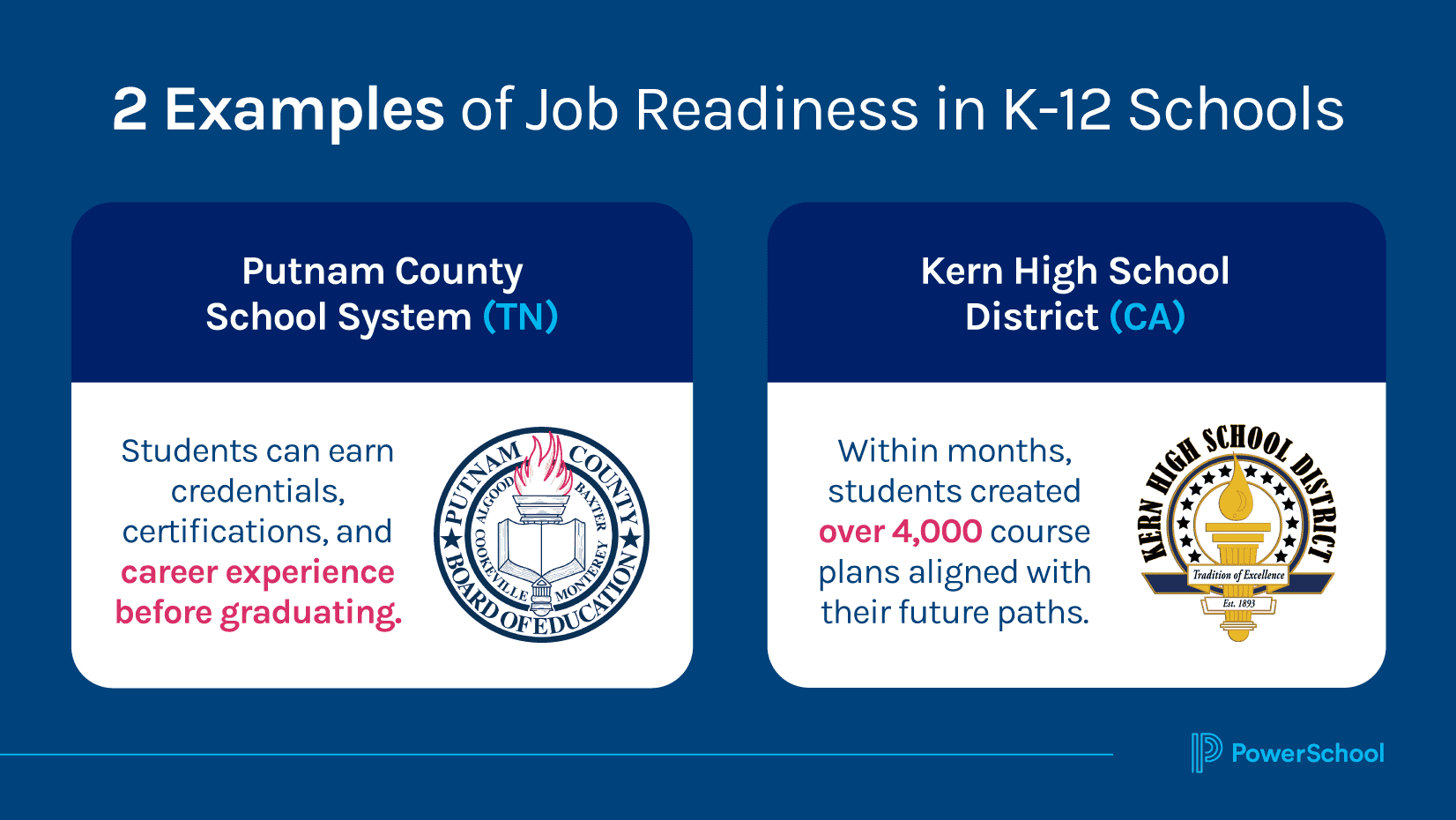
2 examples of job readiness in K-12 schools
Districts that teach job-readiness skills and use software to accelerate learning have found that their students are more engaged. In planning for the future with staff support, students are more likely to graduate and enter fields that align with their skills and interests. The following stories highlight the importance of future-forward programs across K-12 institutions.
- In the Putnam County School System (TN), students have the opportunity to earn credentials, certifications, and career experience they can apply directly upon graduation. Additionally, middle school students at PCSS take a nine-week career exploration course meant to spark the self-discovery that begins their future planning journey. Students and staff use PowerSchool Naviance CCLR for a comprehensive approach to student career exploration, giving students ample time to think about what their postgraduate lives could look like.
- Until recently, Kern High School District (KHSD) in Kern County, CA, did not have job readiness programming implemented across the district. In 2018, after making Naviance CCLR available to all the district’s students, KHSD set out to help students build course plans aligned to their interests while ensuring they met graduation requirements. With ownership over their course plans, students are empowered to be in control of their learning and informed on what they need to do to accomplish their goals. After only a few months of using the program, KHSD quickly saw students create over 4,000 course plans to prepare for life after high school.
How PowerSchool Naviance CCLR supports job readiness
Built for both students and counselors, Naviance CCLR supports essential tools that personalize and simplify postsecondary planning, helping districts ensure they are teaching essential job readiness skills.

Ten job readiness tools for K-12 students
Naviance CCLR is built for students in K-12, beginning with Naviance for Elementary and expanding in depth and breadth as students progress through school. For students in K-5, Naviance for Elementary provides pre-built, standards-aligned lessons covering academic, career, personal, and social themes, as well as a gamified career exploration experience.
Students in grades 6-12 have access to an online, self-paced learning experience that helps to develop life skills, such as managing stress and understanding FAFSA (Federal Student Aid for college, career school, or graduate school). Naviance CCLR also provides tools such as personality and career assessments that help students identify future paths that align with their strengths and interests.
Other features include:
- Resume Builder: A step-by-step guide for creating an effective resume that can be exported to PDF or Word format and used to apply for internships and job
- Roadtrip Nation videos: A library of 12,000+ videos spotlighting leaders who share how they achieved success and overcame obstacles
- Course Planner: A tracker that helps students map out the classes they plan to take, helping ensure they meet graduation requirements while pursuing academic areas of interest
- Portfolio: A repository for students to showcase their achievements to colleges and prospective employers in a curated, sharable format
- College Search: A comprehensive library giving students access to virtual tours of campuses, profiles of admitted students, and information about schools’ specialties and tracks
- Work-Based Learning: Access to real-world career learning experiences to enhance student career exploration and planning
- PowerBuddy for College and Career: An AI-driven, personalized, conversational guide that makes college and career exploration easier and more accessible for students
Tools for K-12 counselors
The staff interface of Naviance CCLR is designed for easy analytics and reporting. Users can identify students at risk of not completing graduation requirements, usage patterns and trends, and student engagement to build a comprehensive picture that helps focus student support and allocate resources.
Staff can help students connect with prospective employers, manage documentation for college applications, and find local work-based learning opportunities. They can also schedule college rep visits, run reports to ensure data alignment to state mandates, and send surveys to hear from students directly.
By bridging the gap between high school and whatever comes next, Naviance CCLR empowers students to take charge of their futures while giving staff the insights and information they need to guide and support learners.
Future trends in job readiness education
To prepare learners for an ever-changing workforce, job readiness education is shifting toward a more adaptable, technology-integrated, student-centered approach.
AI-powered tools will increasingly be used to personalize learning and provide tailored feedback to students. Virtual career counselors and AI-driven skill assessment platforms can help students identify their strengths and match them with suitable career paths.
Job readiness education will emphasize lifelong learning through micro-credentials and digital badges. These certifications allow students to showcase specific skills like project management, public speaking, or proficiency in software programs, making them attractive to employers. Partnerships with online learning platforms will give students access to industry-aligned courses they can complete at their own pace.
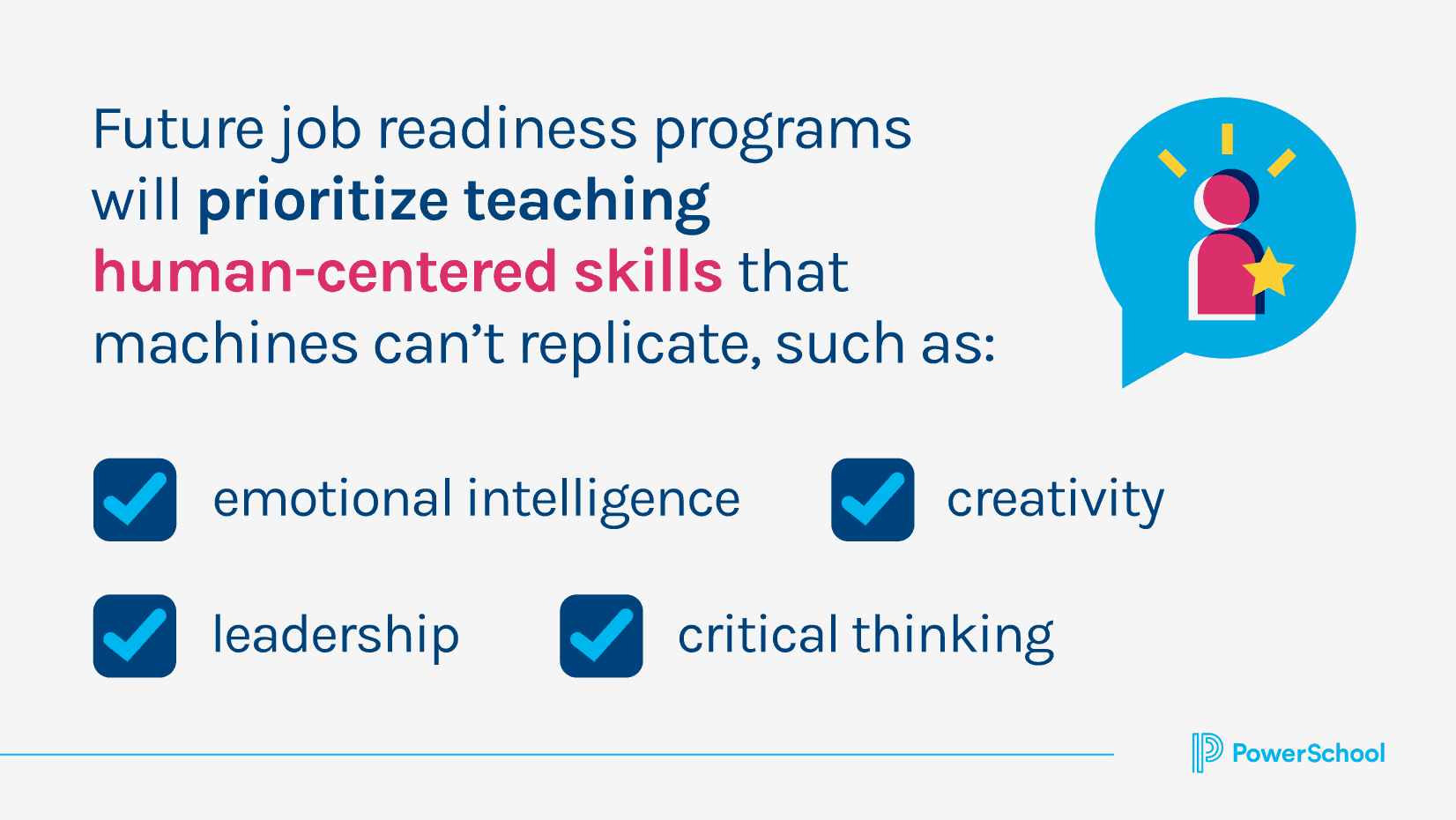
As automation and AI handle routine tasks, job readiness programs will prioritize teaching skills that machines can’t replicate, such as emotional intellig ence, critical thinking, creativity, and leadership. Human-centered skills will increasingly be considered as essential competencies.
Emphasis on job readiness will also cause a rise in work-based learning models. Apprenticeships, internships, and co-op programs will continue to grow, allowing students to gain hands-on experience in their fields of interest. These programs will increasingly integrate hybrid or virtual options, enabling broader access to students in rural or underserved areas.
With globalization, job readiness education will prepare students for a multicultural workforce. Programs will focus on language acquisition, cross-cultural communication, and understanding global markets. Interdisciplinary projects, blending subjects such as STEM, business, and the humanities, will encourage holistic problem-solving skills applicable to diverse industries.
Virtual and augmented reality (VR/AR) technologies will simulate workplace scenarios, enabling students to practice skills in realistic but low-risk environments. For example, students could use VR to conduct mock surgeries, handle customer service issues, or navigate engineering challenges.
At the crux of job readiness skills is the essential principle that students are prepared for lifelong learning and career adaptability.
Job readiness starts with K-12 educators
Job readiness is an essential component of a modern K-12 education. To begin evaluating the strength of your school or district’s job readiness programming, ask questions such as: Would I hire a graduate from my school? Has a graduate been given the opportunity to learn the tools and resilience to overcome challenges in a rapidly changing world? When and how did they practice exercising these skills?
When graduates cross the stage to receive their high school diploma, they’re handed far more than a piece of paper. They’re also receiving the privilege and responsibilities of navigating their personal and professional lives. Their success is in their hands.
Give them every advantage you can by empowering them to succeed in the workforce of tomorrow.