

Preparing secondary school students for their postgraduate lives has never been more important—or more complex. The most recent data from the National Center for Education Statistics shows that approximately 62% of high school graduates enroll in college immediately following high school completion. That leaves 38% of graduated high schoolers either directly entering the workforce, enlisting in military or volunteer service, or leaving high school with no clear path forward.
The NCES also reports that only 60% of those students who enroll in college earn a degree or other credential within eight years of graduating high school.
School counselors play an essential role in guiding students toward college, career, and life readiness. However, many districts face challenges that hinder counselors’ ability to provide individualized guidance. At the same time, students need more personalized tools that empower them to take ownership of their future planning. By addressing these dual needs, schools and districts can significantly improve student outcomes and better prepare high school students to reflect on their strengths, interests, and skills to foster more intentional and thoughtful future planning.
Empowering School Counselors to Maximize Impact

The counselor’s role in student success
School counselors are the linchpins of student success, helping learners navigate academic decisions, career choices, and personal growth. Yet, the reality of their daily workload often limits their ability to fully meet students’ needs. High counselor-to-student ratios, coupled with administrative tasks, leave little room for the individualized attention that best serves students.
The case for improved efficiency
To address this overburden on counselors, it’s in districts’ best interest to invest in tools that streamline workloads and administrative tasks, allowing counselors to focus on their core mission: supporting students. For example, technology can automate tasks like scheduling appointments, tracking student progress, and generating reports. With access to centralized communication platforms and data dashboards, counselors can spend less time managing paperwork and more time engaging directly with students.
Impact on student outcomes
When counselors have the time and resources to focus on students, the results are transformative. They can provide tailored advice that aligns with each student’s unique strengths, interests, and goals. This individualized guidance not only boosts academic performance but also helps students develop a clearer vision of their future, fostering resilience and confidence.
Giving Students Ownership of Their Futures
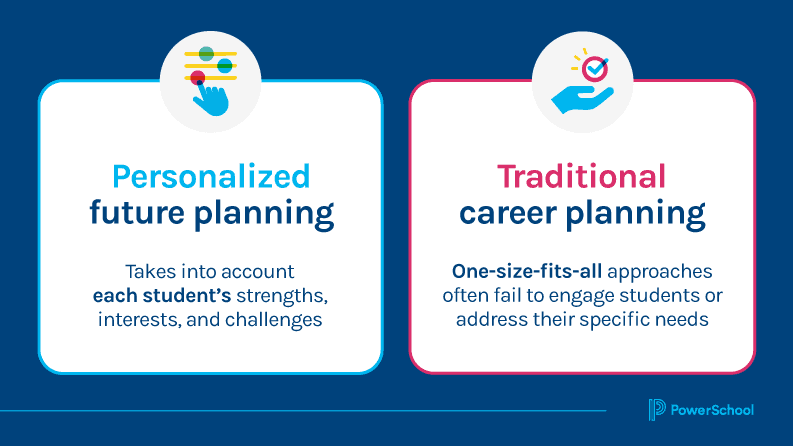
With so many paths available to high school graduates today, personalized future planning that takes into account each student’s strengths, interests, and challenges is essential. Traditional, one-size-fits-all approaches to career planning often fail to engage students or address their specific needs.
To truly empower students, districts must provide tools that offer a personalized experience, helping them explore their best-fit paths and make informed decisions about their futures.
Student agency can be built with the help of technology. Interactive career planning platforms are game changers. These tools enable students to explore various career paths, set achievable goals, and visualize potential outcomes. By engaging with these platforms, students can better understand their options and take proactive steps toward achieving their dreams. This process builds agency, giving students the confidence to take charge of their career and life planning.
With the right tools, students can map out intentional pathways that align with their interests and strengths. For example, a platform such as PowerSchool Naviance CCLR that helps students discover careers based on their interests and provides actionable steps to reach those goals can transform the way they approach their futures. Such tools inspire students to dream big while equipping them with the practical steps needed to turn those dreams into reality, whether those steps involve pursuing higher education, earning industry certifications, finding internships, pursuing military enlistment, and more.
Why Schools and Districts Should Invest in Future Planning Tools for Their Students and Counselors
1) Aligning with strategic goals. Investing in career planning solutions isn’t just about technology; it’s about aligning with broader district goals. These tools support student achievement, improve equity by ensuring all students have access to high-quality resources, and reduce counselor burnout by simplifying their workloads. The return on investment is clear: more engaged students, empowered counselors, and better outcomes across the board.
2) Student success. Districts that have adopted advanced career planning solutions are already seeing measurable benefits. In Putnam County, TN, using Naviance CCLR as part of a nine-week career exploration class for middle schoolers yielded increased student excitement and engagement about future planning. And in Kern County, CA, students used Naviance CCLR to create more than 4000 long-term course plans aligned with their career interests and postgraduate goals.

In general, schools that leverage these tools report increased student engagement, higher graduation rates, and more students pursuing postsecondary education or entering careers that align with their skills and interests. These success stories demonstrate the power of combining innovation with a commitment to student success.
3) Big picture. Ultimately, investing in career planning solutions prepares students for more than just jobs—it equips them for lifelong learning and adaptability in an ever-changing world. These tools ensure that students leave school not only with diplomas but also with the confidence and skills needed to thrive in any path they choose.
Putting Students on the Path to Success
Empowering school counselors and students with better career planning tools is not just a nice-to-have—it’s a necessity. Counselors need resources that maximize their impact, while students deserve tools that give them agency over their futures. By investing in these solutions, districts can set the stage for improved outcomes, intentional career pathways, and brighter futures for all students.
The time to act is now. By prioritizing career planning tools, districts can transform education into a launchpad for lifelong success.

Engage more students, secure more funding
Use our ROI calculator to learn how building college, career, and future planning relevance into school curriculum can improve attendance and graduation rates, directly influencing state funding.
Calculate for ADA states Calculate for ADM states

