Parent involvement in education supports a variety of student outcomes. Family involvement in education is proven to boost academic, attendance, behavioral, and social-emotional outcomes. In short, schools that engage parents for better attendance see clear benefits that carry across its K-12 community.
For this reason, many districts have begun to offer wraparound supports that actively involve families, knowing that parental engagement helps improve student attendance and overall academic success.

Guide to family-school partnerships
Learn strategies to develop and nurture family relationships to impact student success.
Get the GuideWhy parent involvement in education matters
The research on K-12 attendance is clear: students who miss 10% of the school year or more (about two days per month) are more likely to experience academic setbacks. Further, students who are absent for multiple years between preschool and second grade are less likely to read at grade level by the third grade. In the long run, absenteeism can also make high school students four times less likely to graduate.
With parental engagement, students are more likely to attend class. On its own, better attendance helps students avoid challenges with academics, social-emotional skills, and success in their postsecondary lives. This is why a district’s early attendance efforts are all the more essential.
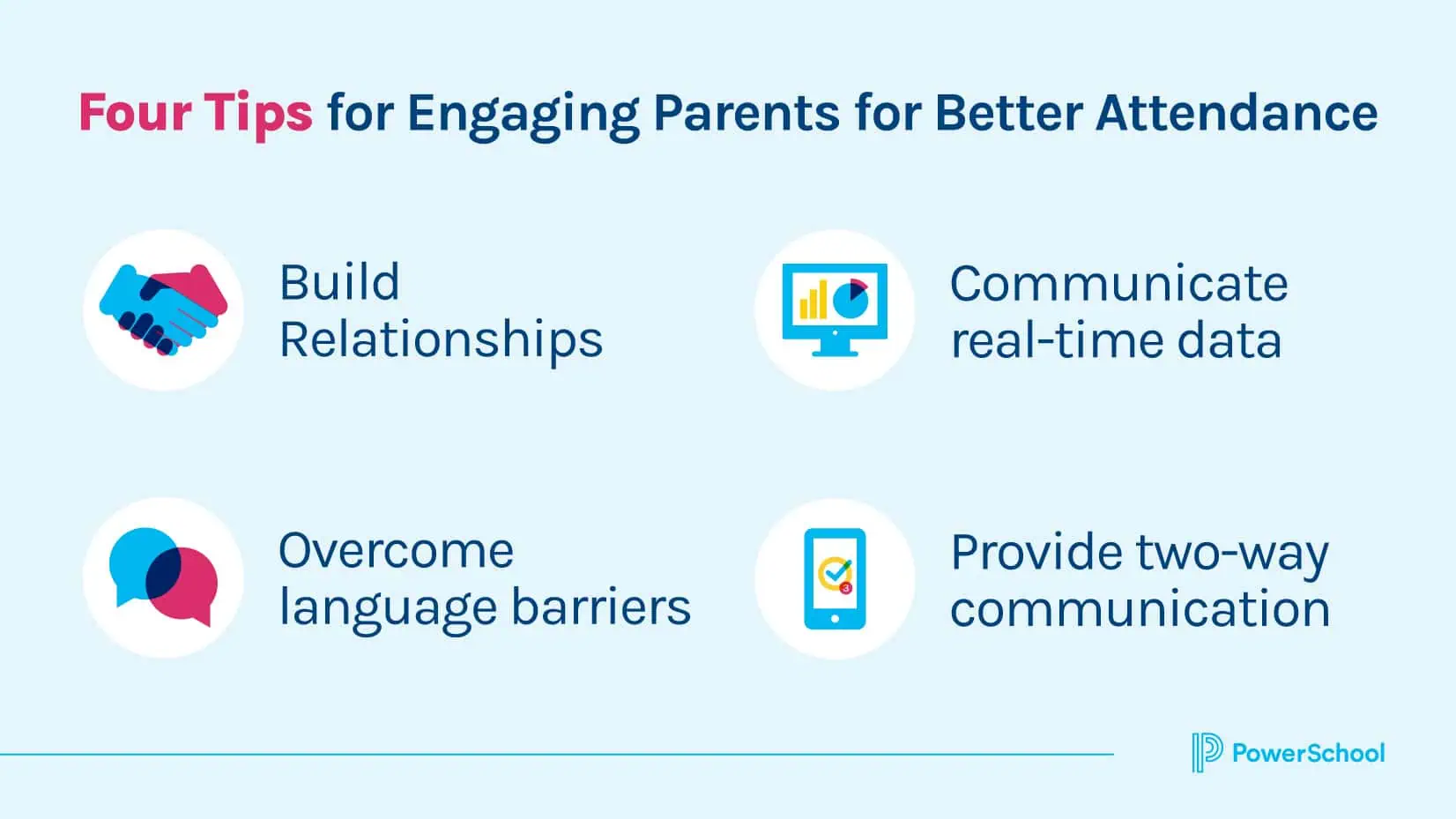
Four tips for engaging parents for better attendance
Building a school culture that engages parents can create a dramatic impact on students. Some schools have applied creative ways to gain parent involvement in education, while others rely on tried-and-true strategies. Here are tips for schools as they address attendance issues with parents.
1: Relationship building to support parental engagement
Strong relationships between schools and families start with trust, respect, and open communication. Schools can make parents feel welcome by inviting them to participate in school activities, offering regular updates on their student’s progress, and creating opportunities for meaningful conversations. Celebrating student successes, both big and small, helps families feel connected and valued.
Mill Creek Community School Corporation uses PowerSchool SchoolMessenger, a modern communication tool with secure messaging functionality, to better engage families. Parents see the school system as a partner in their child’s education, leading to better engagement and collaboration to support consistent attendance.
2: Overcoming language barriers so families can engage better with schools
Language differences shouldn’t stand in the way of parent engagement. Schools can bridge the gap by providing translated materials, using interpreters for meetings, and leveraging multilingual communication tools so that important information is accessible to all families. When Irving ISD faced challenges communicating with families across multiple languages, the district implemented PowerSchool Attendance Intervention. The software allowed families to interact back and forth with their school in real time in their chosen language, helping improve attendance rates to 95%.
3: Communicating real-time data to improve parental engagement
When schools have tools that share real-time attendance data with families, parents can see patterns or issues as they happen—not weeks later. This timely insight helps them act quickly, whether it’s addressing a recurring absence or finding support to get their child to school. With a clear view of attendance trends, families can celebrate improvements, identify obstacles early, and work with the school to build solutions. This transparency keeps everyone on the same page and focused on keeping students present and learning.
4: Providing two-way communication between schools and parents
Two-way communication tools make it easier for schools and parents to connect instantly and meaningfully. Instead of one-sided updates, these platforms allow parents to respond, ask questions, and share context about their child’s attendance or needs. Whether it’s confirming an absence, alerting the school about a transportation issue, or discussing support plans, quick back-and-forth communication helps address challenges before they grow.
For Irving ISD, active two-way communication between schools and parents was vital to improving attendance rates. This ongoing dialogue fosters stronger partnerships and keeps students’ well-being and success at the center of every conversation.
Paducah, KY
The two-way communications allow me to help parents access their Parent Portal so they can keep track of their student’s grades, attendance, and behavior, and complete online registration each year. Several teachers send out family engagement messages letting parents know what their children learned in class today. Prompts are provided to have ‘dinner table discussions’ about what they’ve learned.
Troy Brock Director of Pupil Personnel
Paducah Public Schools
Proven strategies that improve attendance and engage parents
Just like the communities we partner with, PowerSchool is committed to helping more students make it to school each day. With tools like Attendance Intervention and SchoolMessenger, schools and districts are seeing improvements in engagement and communication with families and in student attendance rates.
When Jefferson County Public Schools struggled with student attendance and a patchwork of messaging tools, it switched to Attendance Intervention, which provided better real-time data with built-in dashboards, smarter outreach with multilingual two-way messaging, and consolidated systems. These improvements helped the district better engage with families and realize a 4% increase in attendance.

See the impact of declining attendance
When students miss class, it affects them, along with classmates, teachers, administrators, families and entire communities. See how in this infographic.
Download the Infographic