

Many schools and districts have successfully decreased chronic absenteeism with ingenious tactics focused on their community’s needs. These schools found creative ways to improve school attendance using research-backed strategies rooted in community engagement and data-driven planning to get children to school.
How to improve attendance in schools
The average rate of chronic absenteeism was 13 percent in 2019, and it has doubled to 26 percent in 2025. These changes have led to a broader cultural shift in the ways that families think about attendance. In short, understanding that schools are not alone in their attendance struggles is comforting, but the need to show families that they are also not alone is often overlooked.

Get students back in the classroom
Gain insights into absenteeism and attendance interventions with our toolkit.
Get the Toolkit5 creative ways to improve school attendance
The schools that successfully improve student attendance are often the ones that set clear goals for targeted growth related to classroom attendance. They ensure ongoing support for students while also helping families understand best practices for attendance.
1. Build a school culture of attendance
It takes a village to normalize school attendance again. This can start with grassroots-level changes that prioritize student engagement and presence.
For some districts, focusing on social-emotional learning programs has improved students’ sense of belonging. Others use an “attendance buddy” system that encourages students to connect with one another around daily school activities.
Ultimately, fostering a positive culture helps students view school as a place where they feel welcomed and supported.

On-demand webinar: Effective attendance strategies
Get expert ideas for proactive, data-driven strategies that boost attendance.
Watch NowRewarding students for good attendance is one way to emphasize its importance. As districts consider methods of targeted growth related to classroom attendance, this strategy helps kids get excited about school.
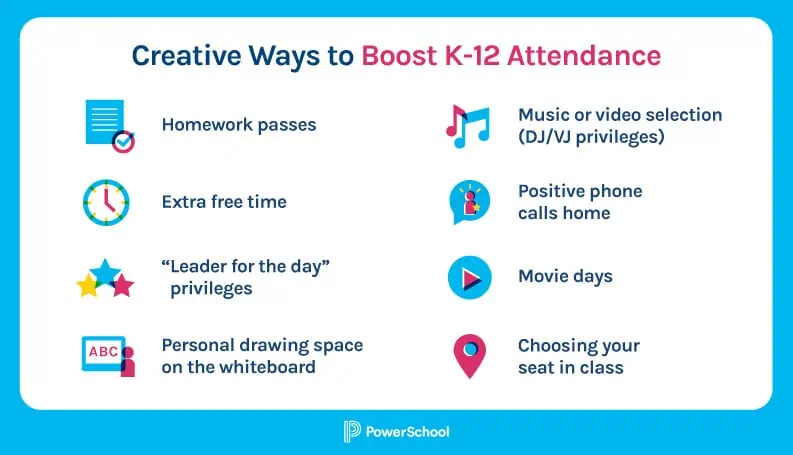
Not all rewards cost money, and connecting creatively with students is also free! Teachers often encourage relationship-building by greeting students at the classroom door, writing them letters, and making predictable classroom routines. In all, schools should ensure that attendance requirements are communicated and reinforced in a caring, clear manner.
2. Proactive, targeted growth related to classroom attendance
Proactive planning is key to supporting classroom attendance and demonstrating the value of attending school. For this reason, attendance improvement starts before the year even begins.
A report by the National Association of Secondary School Principals (NAASP) indicates that professional development for educators should include training on strategies that foster better attendance. This can include training in relationship-building and engagement strategies that are regularly revisited at staff meetings.
According to the report, “principals should reinforce the critical link between relationships and attendance, set expectations for developing relationships with students, and model those expectations.”
For one Baltimore teen, math became boring, zapping her energy and will to put in effort. She loved math as a child, but began failing some of her classes in high school. “We barely had any activities,” she said—adding that she learns best with one-on-one support. “When I started getting worse at math, I just stopped coming.”
Source: USA Today
3. Engage families around attendance
Engaging families with creative ways to improve school attendance can include the following:
- Nudge letters like texts/postcards, or home visits, can speak to the realities of families as they balance a household with children of various ages and needs. The most effective messaging is culturally responsive and community-focused.
- Schools should avoid stern or legal language in their contact with caregivers, and also refresh their messaging, especially when absenteeism tends to spike, such as holidays, winter break, and in spring.
- Families that tend to check mail and email less often can benefit from texting. As schools aim to meet parents where they are, here are some tips for texting families around engagement and attendance.
- Some teachers may be unaware of their influence on attendance, but reports show that their ability to nurture belonging and connection is unparalleled. Meanwhile, teachers need support from their school and district leaders, including guidelines for clear messaging, simple communication tools, and ongoing support for basic needs. Streamlined access to counselors and health services also ensures student success.
4. How to improve attendance in schools with community engagement
Community partnerships support targeted growth related to classroom attendance by providing resources like transportation and mentorship programs. A recent government report shares some successful strategies for community/school collaboration:
- Tap into local school staff that can speak to community needs. This helps administrators plan strategies on how to improve attendance in schools. Local resources for health, transportation, food, social services—and more—can greatly impact a family’s ability to get their child to school. When safety is a concern for walking students, some communities have set up a “walking school bus” through community organizations to help students attend more regularly.
- Reach out to community partners with information and data about your needs. Attendance Works shows that local leaders and partners are more likely to become involved when they see that better attendance helps the whole community.
- Keep distribution methods in mind apart from texting, emails, and calls. Many community organizations reach local families through handouts for student backpacks, in-person events, social media channels, or billboards.
5. Gain momentum with data-based decisions that remove barriers to attendance
Helping students with individual challenges is an example of targeted growth related to classroom attendance, since personal struggles can keep them from showing up.
- With granular data, schools can better understand student subgroups. For example, are students within a mile “walk to school” radius less likely to attend? Are students with younger siblings less likely to show up? Are students skipping particular classes? These questions can help schools create targeted solutions.
- Encourage teachers to report qualitative data. Simply speaking, if teachers hear a student mention that they moved to their grandparents’ house, they are more likely to inform school leaders about the change if they are reminded about the significance of this data.
- A common saying is “What gets measured is what gets done.” When schools ask the right questions of their data, they can take better action on it. For example, if certain students are regularly tardy or leaving early, knowing their personal situations or group commonalities can help schools plan targeted interventions.
- Schools can better enforce shared accountability for reducing absenteeism with modern technology, AI reports, and more—without additional stress for staff. Sometimes, solutions are as simple as distributing thermometers to help parents determine student wellness through community partnerships or organizing group walks to school.
Family-focused attendance interventions
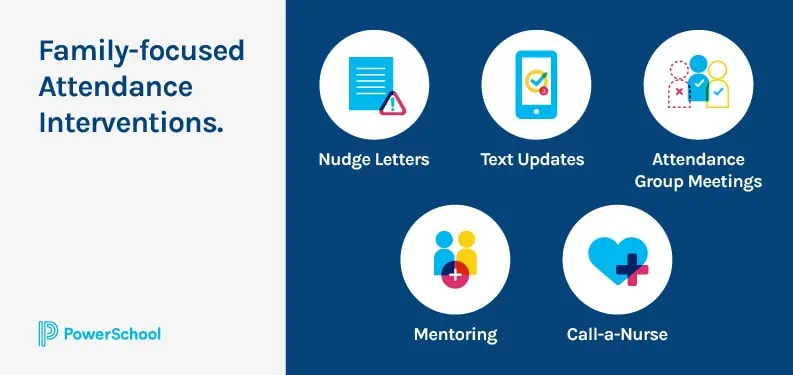
Among the many creative ways to improve school attendance, staff are focusing on interventions and engagement strategies that build the school-home connection.
One such solution involves supportive notifications that meet families where they are, according to their preferences. Notifications can include personalized nudge letters, text updates, and invitations to attendance group meetings. They often contain personalized data on the number of days a student has missed, and some statistics about the importance of attendance.
Mentoring-based interventions are also popular, but they can require more resources. Another effective, but more intensive, solution is a call-a-nurse program that helps caregivers gauge their child’s wellness for attending class and helps keep students healthy.
Strategies for improving attendance in high school
Broadly, high schoolers face attendance challenges that are often more complex than those found in elementary and middle school. That’s why creative strategies to decrease high school absenteeism should address social stressors, responsibilities for younger siblings, and mentorship around time-management skills—especially for working students.
Some districts find success with advisory periods that offer academic check-ins, wellness support, and goal-setting conversations. Other success stories come from districts that use “nudge” communications (like those offered by SchoolMessenger), which can boost high school attendance, especially when they are connected to real-time data around student goals.
PowerSchool can improve attendance in schools
PowerSchool equips leaders with technology that supports creative ways to improve school attendance. With attendance tracking, automated alerts, and real-time data, leaders can quickly identify students at risk of missing class and take action. Our integrated two-way communication system helps schools reach families with timely updates and attendance support.
With a focus on targeted growth related to classroom attendance, our tools offer the necessary resources to foster school-home engagement and keep students in school.

Using student data to improve attendance & engagement
In this Customer Success story, read how Power Center Academy uses student data to improve attendance and engagement.
See How

