Unorthodox tidbits from a former practitioner and current data strategy consultant
By Sarah Singer, Director, Education Solutions, PowerSchool, and former school district director of a division that housed Research, Accountability, Assessment, and Strategic Planning
Data can transform educational practice. More than ever, especially when considering how the COVID-19 pandemic impacted education, student data analytics is needed to understand where they are in their learning.
According to “Why data culture matters” by McKinsey & Company, “Don’t approach data analysis as a cool ‘science experiment’ or an exercise in amassing data for data’s sake. The fundamental objective in collecting, analyzing, and deploying data is to make better decisions.”
But this kind of effective use of K-12 data throughout an organization doesn’t just happen overnight. It takes building a culture of data, including belief systems, norms, practices, and routines. And culture building is not easy to do. If done well, however, strategic priorities and accompanying plans are infinitively more likely to succeed.
As Peter Drucker said, “Culture eats strategy for breakfast.”
I formerly oversaw a division in a large public school system that housed Research, Accountability, Assessment, and Strategic Planning. When I first took that role, I was determined to build a data culture. I was young and excited, pushing to create a “data culture revolution.”
On the plus side, because people always appreciate passion, they fed off that energy. But, in reflection, my data culture initiative was sort of a middle-tier priority for the district, at best. Urgent needs and other strategic priorities initially received more time and attention.
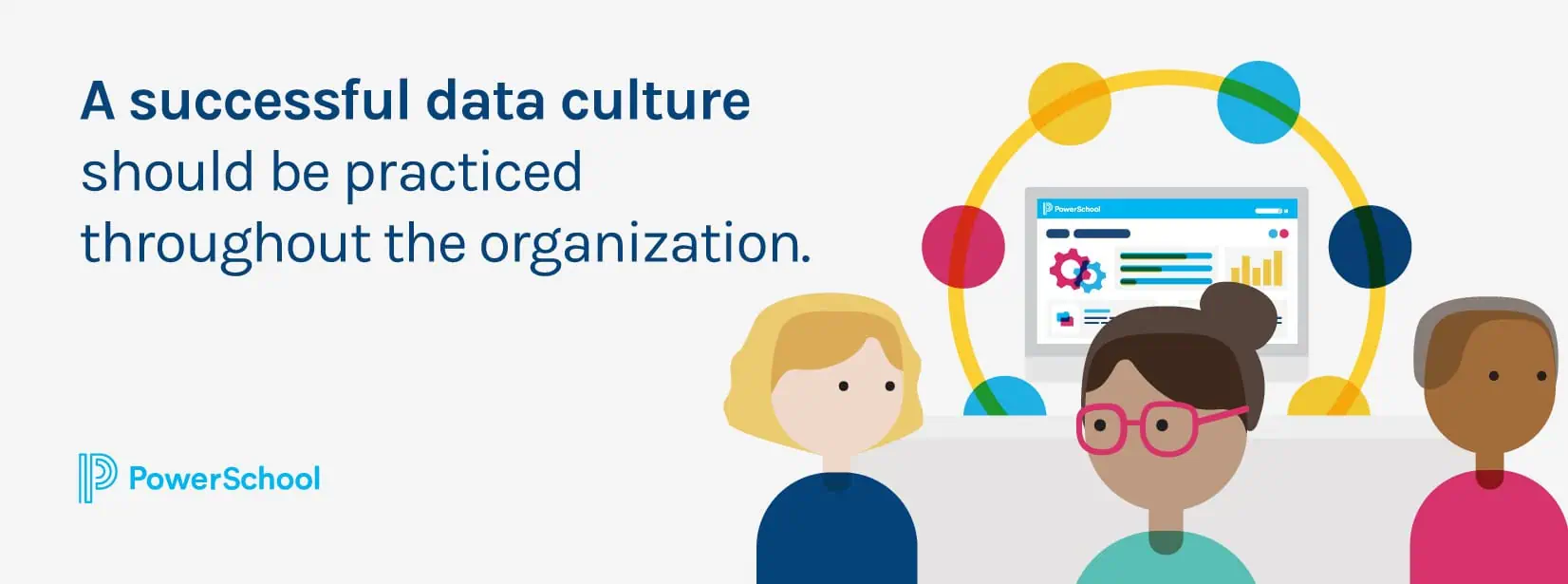
I also realized that my passion alone was not enough to carry the day. Our systems were people-dependent, wrought with single points of failure. If any one key person left, the whole data culture was ready to crumble. Culture, which transcends the act of one or a few individuals, needs to permeate the masses. I made progress for sure but did not quite get there.
Fast forward several years later to the present. Having held various roles in education, I have now had the opportunity to work with many school districts across the U.S. on their data strategy and culture. Through this work, I have come to better understand some of the critical components that make up a data culture. Here are just a few of these.
1. Building a Data Culture by Itself Will Always Be a Mid-Tier Priority at Best; The Key Is to Attach Data Use to the Highest Priorities
At the end of the day, improving graduation rates, or ensuring that graduating students are prepared for college, career, and life readiness (CCLR), will take precedence. Urgent items like staffing shortages due to COVID-19 will also always be a priority.
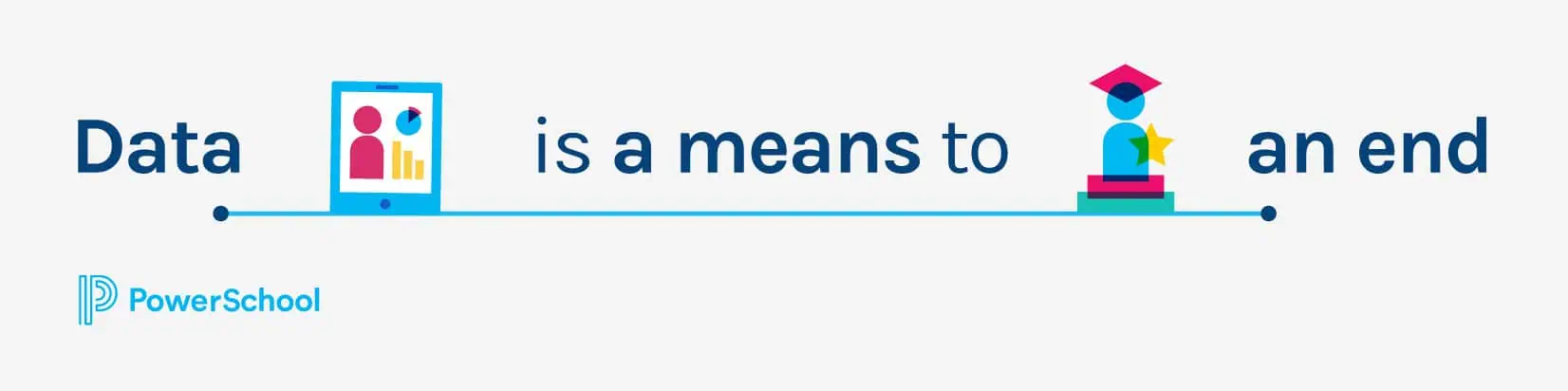
I’ve learned that the key is that data is a means to an end. For example, reviewing and monitoring data helps to improve third-grade reading scores and graduation rates. Embedding data practices within key strategic priorities should be the first step for any practitioner looking to build a data culture.
2. Data’s Primary Role Can’t Be Punitive
Accountability is important, but if the dominant use of data in your system is to hold educators “accountable” for their actions or lack thereof, they will develop a troubled relationship with data. Without exception, data should primarily be framed as one tool to support educators as they work to improve students’ lives.
3. Structured Systems Are Necessary to Build Educator Competence and Confidence
If data culture is lacking, the best way to build momentum is to ensure that your district or school builds in the time and space for groups of educators to collaborate around problems of practice.
Examples include professional learning communities, freshman success teams, and school improvement planning teams. These teams can then build the use and monitoring of data into their meeting routines. This, in turn, will build organizational competence and confidence with data. More importantly, it will ensure better student outcomes.
4. Optimize Educators’ Time
Educators should not be wasting time with outdated spreadsheets, or filters on spreadsheets. They should not be going to three or four platforms to review data (assessment platforms, attendance, or behavior, for example, which often sit in different systems).
I believe that it’s a colossal waste of time for educators to search for the data they need, filter it to their liking, or put in a data request and wait several weeks for a partial answer to their data questions. Time is the most precious resource in education. The good news is that technology can handle data analytics more efficiently—and better—than humans. Teachers should spend their time doing what they do best: teaching students. We should set up systems that remove any obstacle that prevents them from doing what they do best.
Learn more about the problem with using spreadsheets for K-12 data analytics.
5. Invest in an Up-To-Date Analytics Platform
To make all the above happen, invest in the right data platform. The platform is “the engine” for a district’s data culture, and the car will not run without a well-functioning engine.
Too many districts are stuck with outdated modes, such as spreadsheets, shared drives, or even BI (Business Intelligence) tools. Your platform should bring together disparate data sources to create a one-stop data shop. This will help educators correlate data and make meaningful connections across domains.

Your dashboards should be in real-time and allow you to drill down to the student level. Critically, there should be no “wait time” for the data educators need.
PowerSchool Analytics & Insights is an example of this type of platform. Alone, it will not build your data culture for you. But having this tool sets you on the right path.
6. Lead with the Assumption That Educators Are the Smartest People on the Planet
I’m serious. There’s hesitancy in some districts to provide educators access to data. I believe that once educators are provided with the tools and the space to collaborate—and have the competence and confidence to use data—they will do amazing things. They’ll support students in ways that a central office administrator or policymaker would never have dreamed possible.
Initially, educators will rely on the structured systems available to them. But eventually, their confidence grows, and they will find ways to impact students’ lives in their own time and their own organic ways.
About the Author
Sarah Singer, Director, Education Solutions, has spent the past five years in education technology. At PowerSchool, she is often called upon to discuss the topic of analytics and how they can be used to drive student, school, and district success. Previously, Sarah worked at Portland Public Schools in Portland, Oregon, where she last oversaw a division that housed Research, Accountability, Assessment, and Strategic Planning. She also led a large initiative to redesign the high school system, resulting in a 21-percentage point increase in graduation rates. Sarah also spent six years as a management consultant for Deloitte Consulting. Sarah lives near Portland, Oregon, with her partner and two children.

Read the Report—From Sight to Vision II: When Data Use Becomes Data Culture
Learn what makes a data culture strong, as well as what makes a bad data culture. In this whitepaper, you’ll read examples of how different school districts have achieved positive results and best practices to improve or create better data cultures (and avoid fostering bad ones).
Get Your Copy