Written by
Evo Popoff and Liz Cohen
By Evo Popoff and Liz Cohen
Schools and districts today are collecting more data about their students than ever before with each piece showing just one part of a student. But, educators can’t provide students with truly personalized learning experiences based on an incomplete picture. Personalizing instruction requires seeing the whole child by connecting the disparate data points to form a complete picture.
Menlo Park, CA

Today’s (data) systems provide a wealth of information … to help us better understand the full education journey each child takes across a range of learning environments.
Jean-Claud Brizard President and CEO
Digital Promise
“Data-driven decision-making has been an on-again, off-again theme in education for nearly two decades,” says Jean-Claud Brizard, President and CEO of Digital Promise. “But what has changed is the sheer power of modern-day data systems, particularly when in the hands of educators in school systems with strong data cultures. Today’s systems provide a wealth of information about our students, far beyond one-dimensional performance on assessments. And that information can help us better understand the full education journey each child takes across a range of learning environments: in the home, the school, the community.”
In this blog, we’ll discuss insights from the new whitepaper, “From Sight to Vision: How Data Can Contribute to Personalization and Preparedness in K-12 Education.” This research-based whitepaper, with a foreword by Brizard, explores how data can help districts not only better “see” their students and staff but inform a vision of personalization that can serve as a foundation for post-pandemic K-12 education.
Personalized Teaching and Learning During COVID-19
Before COVID-19, personalized learning meant adapting instructional materials to fit the needs of each student. Teachers combined their observation of students in the classroom with data, primarily from assessments, to identify who was struggling and then tailor instruction accordingly.
As schools shifted to remote and hybrid instruction, it became a challenge for teachers to see the whole student: to understand if they were engaged in their learning or if they were struggling emotionally. To overcome this challenge, districts and educators had to rely more on data to present that complete picture of their students. Fortunately, with more digital records as a result of greater reliance on technology-driven instruction, educators discovered a wealth of data beyond test scores that proved equally useful for targeting support to students and their families.
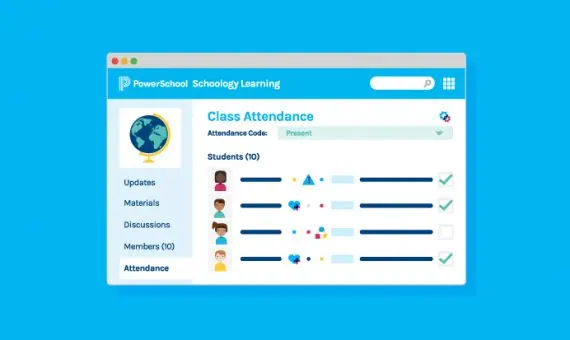
For instance, Maryland’s Howard County Public Schools used data during the pandemic to ensure students were able to access lessons and to monitor student engagement, attendance, and academic performance. As Brandy Iskin, the district’s data warehouse and reporting coordinator explains in the paper, the district’s holistic approach to data meant that “at a glance, the classroom teacher, the student services team and the principal could just look and see — who do we need to reach out to? Who’s not going to be fine?”
Improving Equity with Data
In addition to providing more personalized learning, data can help districts and schools address equity goals created long before the pandemic highlighted gaps. When districts see each student as an individual with their own needs, aspirations, and challenges, then they’re positioned to address equity issues they’ve been working on for years.
An example spotlighted in the paper is in California’s Kern County. During the pandemic, Kern County Superintendent of Schools discovered that English learners in one district it served were struggling with remote instruction. As a regular data practice, Kern analyzes its data to identify districts with three years of positive data trends that might provide successful strategies and interventions that other districts could replicate. The process identified a district with similar demographics where English learners were thriving, giving them actionable strategies that could serve as a model for the struggling districts.
Geomapping—the process of converting raw data into maps—also became a tool for equity during the pandemic enabling districts to find students, analyze population trends, address challenges of access and deliver vital services and resources to educators and students. For instance, during the pandemic, plotting data points on maps helped districts determine who needed internet access and devices and even decide whether it was safe to reopen schools.
Building a Data Culture
A strong data culture is critical for leveraging the power of data tools to personalize learning, but building a data culture is not easy. However, consistent themes emerged from the practices and strategies administrators share in the white paper. For instance, the districts spotlighted in the paper all took steps to show teachers that data holds the power to transform their classrooms and the lives of their students and to make their jobs easier—and isn’t just another compliance task for them to perform. This meant, in turn, ensuring that the data reports they generated had to be relevant, useful, and easy to access by teachers.
To create a district with a true “data culture,” all employees must believe that data are essential to achieving the district’s goals. Administrators, teachers, and staff not only need to trust data but to accept that it’s the key to providing personalized instruction.
Washington’s Bellevue School District accomplished this by creating internal videos explaining the importance of data and why the system operates a data warehouse. Their data culture focuses on engagement, meeting educators and staff where they are, and pushing them to think about how they can make better, more timely decisions.
Conclusion
The stories in this blog and the report serve as a roadmap for districts to reimagine how they use data to support each individual student. They also demonstrate that we’re just beginning to use the transformative power of data to personalize learning in areas beyond those that address a student’s academic needs. We’re on the cusp of a new era in education, one that harnesses the power of data to finally see the whole child.
About the Authors
Named State Policy Maker of the Year by the State Education Technology Directors Association(SETDA), Evo Popoff previously served as Chief Innovation and Intervention Officer and AssistantCommissioner for the New Jersey Department of Education, where he oversaw the state’s education technology and school and district improvement efforts. Prior to joining the Department, Mr. Popoff led the development of education technology products and school improvement solutions in collaboration with district and state leaders and educators. Before beginning his career in education, Evo practiced law at McDermott, Will & Emery, where he worked on labor and employment, antitrust, and general corporate issues. He holds a B.A. in Political Science from the University of Chicago and a J.D. from The George Washington University Law School.
Liz Cohen, a Senior Director at Whiteboard Advisors, began her career in education at the District of Columbia Public Schools, where she worked in the Office of Data and Accountability. She also worked at the District of Columbia Office of the State Superintendent, the Institute for Children, Poverty, and Homelessness in New York City, and 50CAN. For over a decade, Liz worked as an independent consultant for foundations, districts, and non-profit organizations in the K-12 education space. Liz was also a member of the inaugural cohort of Harvard University’s Center for Education Policy Research Strategic Data Project. Liz holds a Master’s degree in Public Policy from Georgetown University and a B.A. from the University of Pennsylvania, where she graduated summa cum laude and Phi Beta Kappa.

Read the Complete Report
This report investigates how forward-thinking districts and states have leveraged data to see the whole student, and by doing so, have reimagined personalized learning.
Get Your Copy