


Across the country, teacher turnover rates are improving slowly, but teacher burnout remains a persistent challenge. Educator burnout can impact the overall success of school staff, teachers, students, and communities—not to mention teacher retention.
Fortunately, research has uncovered some factors that decrease burnout and support teacher retention initiatives. Key evidence suggests that schoolwide community-building and engagement initiatives can successfully decrease teacher overwhelm. In other words, schools that consistently support and engage teachers are more likely to retain them.
In this blog, we offer an overview of best practices for avoiding teacher burnout and retaining your best educators.
What is teacher burnout?
Teacher burnout is “a condition in which an educator has exhausted the personal and professional resources necessary to do the job,” according to the National Education Association. Broadly, educator burnout stems from performing high demand/low control work without enough support—leading to overwhelm and lack of confidence at work.
Some specific causes of teacher burnout include managing overwhelming workloads, addressing student behavior without adequate support, and educating a broad range of students without enough resources to meet their needs. In turn, research has shown that schools with systematic engagement and teacher retention practices see lower rates of teacher burnout and turnover.
Trussville, AL
Quality, satisfied employees help make our students and system more successful.
Rachel Poovey Assistant Superindendent
Trussville City Schools

Boost educator success with comprehensive solutions
Discover the keys to boosting morale and retaining staff.
Learn MoreA Gallup report shows that educators are 62% less likely to leave their school when they feel engaged, noting that it is important to avoid blaming individuals for burning out. Instead, the report suggests that leaders can make systematic changes to decrease teacher burnout. These include intentional interventions that support a schoolwide culture for teacher success.
What are the signs of teacher burnout?
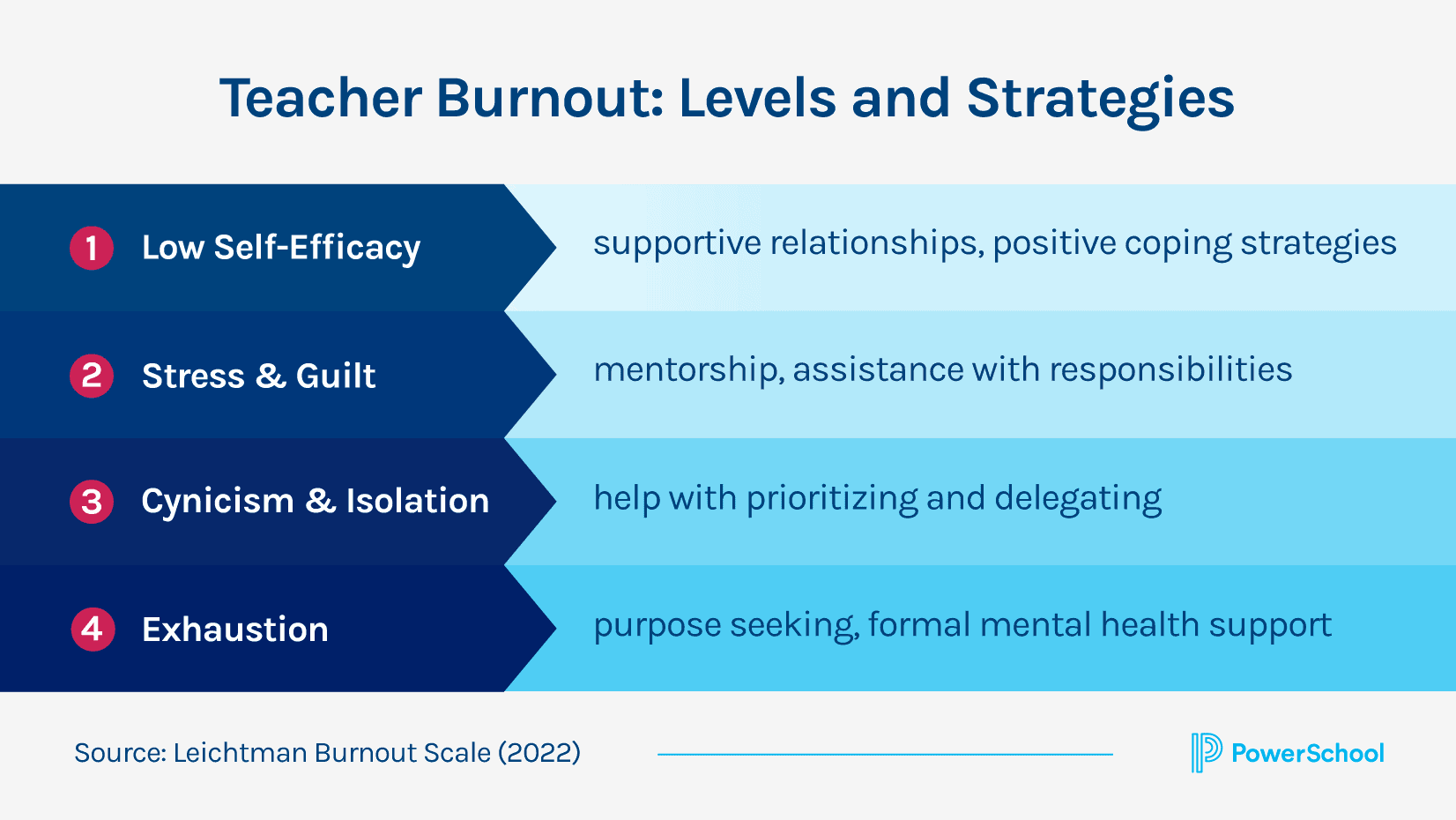
Symptoms of teacher burnout can vary by person and extent. With the Leichtman Burnout Scale, educators and leaders have been given a framework to help them understand the signs, levels, and supports available to burned-out teachers.
Signs of teacher burnout include:
- Feeling “not good enough”
- Relying on negative coping strategies
- Neglecting responsibilities at school and home
- Lack of interest in professional development
- Lack of interest in hobbies
- Fatigue or other physical symptoms
- Declining student outcomes
- Lack of optimism
- Irritability
- Guilt
- Isolation
Brunswick, ME
Schoolwide systems that minimize administrative paperwork and set clear expectations for students and families can relieve pressure on teachers and reduce burnout.
Doris Santoro Education Professor, Chair of Education Department
Bowdoin College
How schools can help prevent teacher burnout
Often, teacher exhaustion is caused by systemic stressors, so burnout interventions that place the onus on teachers are less effective than purposeful schoolwide changes. In short, reminders or presentations about self-care or “remembering your why” do not work as well as intentional policymaking.
Research shows that educator burnout is most effectively reduced when leaders build and maintain a culture of support that is bolstered by data-based practices. Fortunately, more schools have begun to offer system-wide supports, and teacher job satisfaction is beginning to rise.
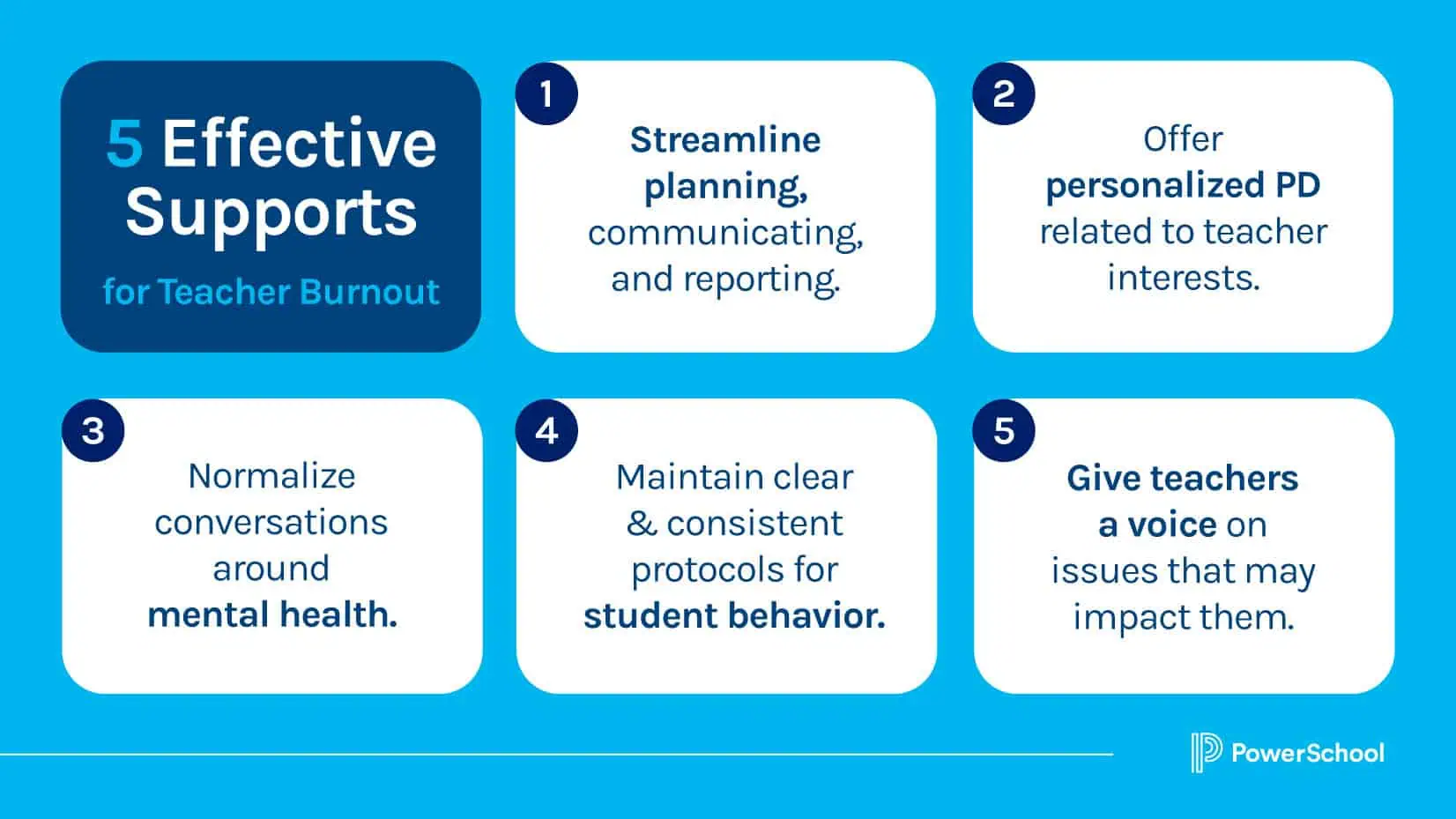
Effective supports for teacher burnout prevention
- Hold reasonable expectations for all teachers.
- Explicitly encourage staff to use time off as needed.
- Offer consistent support to address student behavior and safety issues.
- Ensure that development opportunities are high-quality and well-resourced.
- Encourage teachers to share their views on decisions that impact them.
- Provide positive, personalized, and specific feedback frequently.
- Streamline administrative processes like planning, reporting, and communicating.
- Normalize conversations around mental health that are modeled by school leaders.
- Enact consistent safety and behavior protocols for students.
- Establish ongoing processes for teacher retention, including work/life balance policies.
- Plan initiatives to address equity concerns that can impact teacher shortages.
How does teacher burnout impact students?
In recent years, studies have uncovered a connection between teacher burnout and a perceived lack of self-efficacy in the classroom. This can trickle down to students. For example, a teacher who lacks confidence in applying classroom management tactics may unintentionally create a more disruptive classroom environment for all learners.
Since teacher stress increases student stress, both instruction and academics are impacted negatively by burnout. Student relationship-building can also suffer. Meanwhile, the lack of consistency caused by turnover can create additional challenges with student behavior.

Teacher burnout statistics
The data shows a clear path forward: teachers need support to ease their pressures around paperwork, engagement, and hiring support. If administrative tasks pull teachers away from student-centered education, if schools are understaffed, or if educators feel less engaged, the resulting burnout can lead to district difficulties with teacher retention.
At the same time, the way forward is also clear: teacher burnout solutions must include bolstering their connection to the school community while also decreasing administrative burdens. Research shows that these are the keys to retaining great educators.
How can district leaders help?
Just as teacher burnout impacts students, it also impacts retention. For this reason, many district leaders have reached beyond burnout-prevention initiatives, knowing that retaining experienced teachers boosts student success and consistency across their organization.
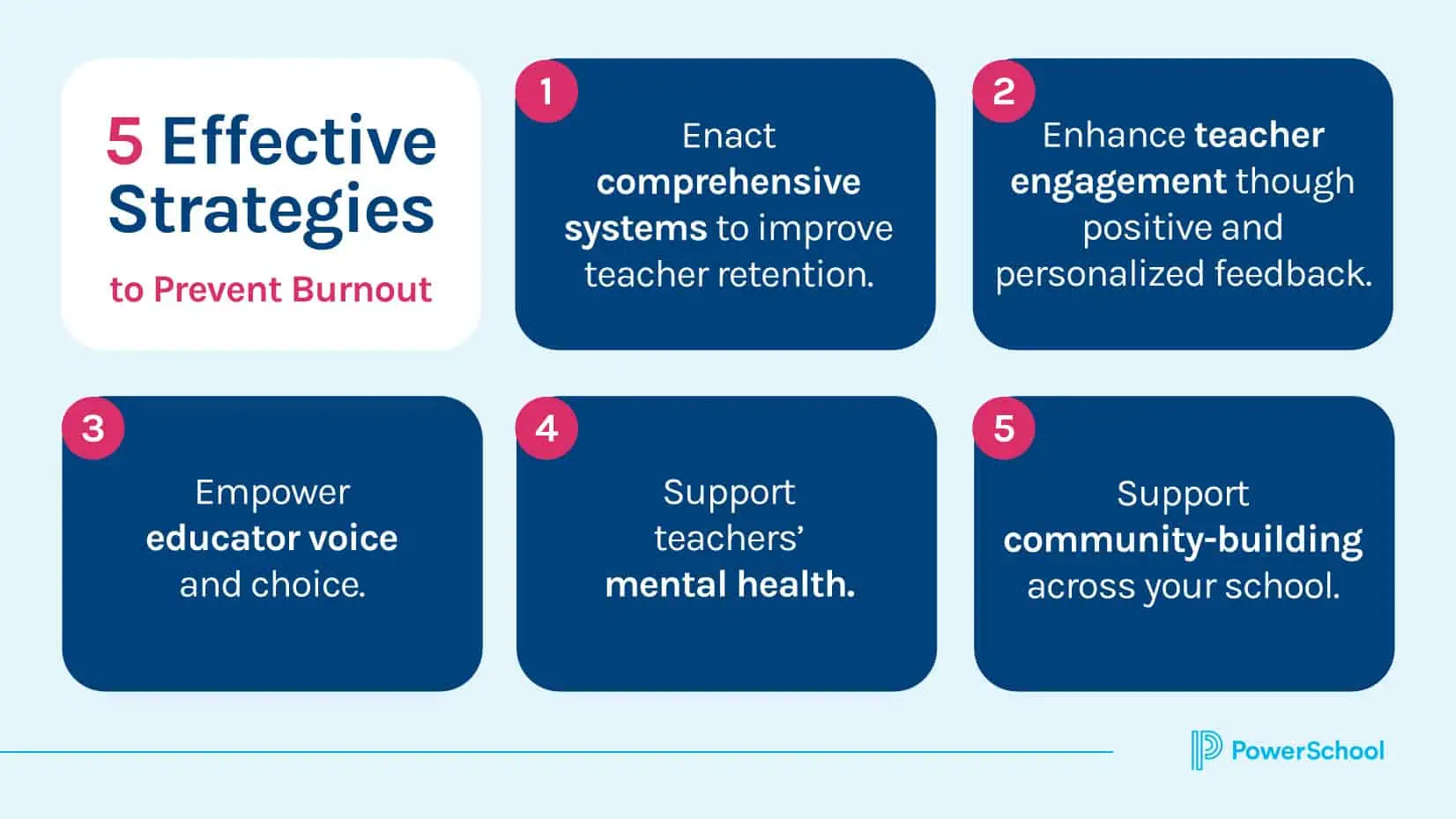
Here are 5 effective teacher burnout prevention strategies.
- Enact comprehensive systems to improve teacher retention.
When schools initiate and fund system-wide policies that promote a culture of appreciation, connection, and efficacy, they retain more educators. - Enhance teacher engagement though positive and personalized feedback.
Acknowledging achievements consistently, creating reliable networks of support, ensuring that teachers have adequate time for planning, and encouraging work/life balance are all essential elements for a positive school environment. - Empower educator voice and choice.
Teachers feel valued when they are asked for feedback, and their suggestions can lead to impactful solutions, especially around school climate, feedback, resources, engagement, and relationship-building. - Support teachers’ mental health
With greater levels of anxiety and depression among educators, it’s critical for district leaders to model and normalize conversations around mental health. Burnout is known to decrease when schools support teacher mental health and enable educators to take time off as needed and allowed by district policies.When considering the widespread challenge of teacher burnout, it is also important to note that schools are facing counselor shortages, which may lead teachers to adopt a counselor role without proper training. This can lead to exhaustion, as teachers often lack resources or training on social-emotional learning. - Support community-building across your school.
When teachers have a voice, feel heard, trust their leaders, and rely on colleague support, they are more likely to feel invested in their work. One way to promote growth in these areas is to initiate “instructional rounds.”Instructional rounding is an ongoing practice that involves teachers visiting a colleague’s classroom to learn from them. The most successful instructional rounds involve school leaders who ensure that teachers have coverage and support to observe other educators and share feedback.In seeing other teachers’ approaches—from subject-area instruction to classroom management practices—teachers grow comfortable building collegial relationships that support growth. Across the board, instructional rounds help teachers define and unpack challenges in their own practice.
Tyton PartnersTeachers stay in their jobs when they feel a sense of community. Maintaining community is key to addressing teacher turnover and burnout.
Decrease burnout and improve teacher retention with PowerSchool
While teacher burnout leads to lower retention rates, there are research-backed ways to decrease burnout. These include streamlining administrative processes, offering additional supports, and building community relationships through mentorship.
That’s why we created the PowerSchool Talent Recruitment & Retention Solutions. We connect tools for real-time instructional coaching, goal setting, and personalized professional development to help teachers grow and succeed using data-driven strategies.
Learn how PowerSchool helps schools retain effective educators and enables them to thrive with our comprensive platform aimed at overall student success.

Support and retain teachers
Supportive districts are on track for increasing teacher retention. Take the first step by offering year-round support.
Get the Guide

