Families within your school or district can significantly impact their student’s academic and overall success. Research shows that when parents are involved, students earn higher grades and do better on tests. In a supportive and caring home environment with engaged parents, students are “less likely to become involved in substance abuse, violence, and other problem behaviors,” according to an American Psychological Association article.
Further Benefits of K-12 Parent Involvement:
- A reduced absenteeism rate by 40% when schools foster family connections and build strong relationships with families
- Teachers report significant changes in their classrooms around student motivation, behavior, and attendance when families help ensure students attend class, encourage and support learning at home, and regularly communicate with school staff
The challenge for educators is creating connections with families that can help lead to better parent-student communication and engagement. In this blog, we’ll look at the benefits of positive partnerships between schools and families and how to overcome common challenges you may be facing in engaging families.
A Closer Look at Strong Family-School Partnership
When families are engaged, students take more responsibility for their attendance and learning and hold themselves accountable for their actions in and outside school. Engaged families and students are more likely to seek help when needed, and school-family partnerships can also strengthen student-family relationships.
“There are usually three things parents are looking to stay informed about in the school life of their children. They want to know about assignments and when they are due. They want to see grades, and they want to see their child’s work,” says Jill Rice, Instructional Technology Specialist at Lee’s Summit Schools, MO.

5 Challenges When Engaging K-12 Families
While the benefits are clear, there are also challenges to engaging with families—including having enough time, training, and support. Here are the top five challenges to engaging families.
- Obtaining Accurate and Up-to-Date Contact Information—Inaccurate or missing contact information is a significant barrier to family engagement and building robust family-school partnerships.
- Finding Channels of Communication that Work—Schools that primarily use mail and email to communicate with families are less likely to make contact than those using text messaging and phone calls.
- Language Barriers —It can be tough to communicate and engage with caregivers with limited English proficiency. Pew research indicates only 53% of immigrants are proficient English speakers.
- Mistrust Based on History—Families who feel unwelcome due to prior experiences or are worried about being judged are much less likely to engage with educators.
- Lack of Tools, Resources, and Time—Even with up-to-date contact information and a plan to communicate with families via text, teachers struggle to find the time to implement regular and efficient communications and struggle even more to find the time to respond.
How to Overcome Engagement Challenges with K-12 Families
The previous challenges can be discouraging as you try to connect with families. There are, however, strategies to overcome them and enjoy positive, effective communication and lasting relationships with parents, guardians, and others within the family. By doing so, you can help build the foundation for future student success as they begin to receive support within the home.

A beginning strategy is to create a family engagement action plan. Wherever a district or school is on its family engagement journey, action plans and toolkits can help educators optimize systems that are already in place, establish new systems and processes, and evaluate introducing new tools and resources, from software to professional learning.
An action plan should serve as a comprehensive guide covering the entire academic year. It should include practical steps to:
- Collecting accurate, updated family contact information
- Establish an outreach and communications schedule
- Setting communication goals
- Continuing professional learning to improve engagement strategies and skills
To see six additional strategies to overcoming communication challenges—such as how to leverage technology, center student experiences, and build trust—download the full eBook, “Guide to Family-School Partnerships.”
Final Tips for Establishing Family Connections
As you build plans for initial outreach and ongoing communications, ensure you’re providing training and support to your teaching and administrative staff, especially if you’re leveraging a communications tool. Nurturing family connections and building strong school-family relationships won’t happen overnight. But by setting goals and creating an engagement plan, districts can take steps to make sure students are on track for success and stay there.
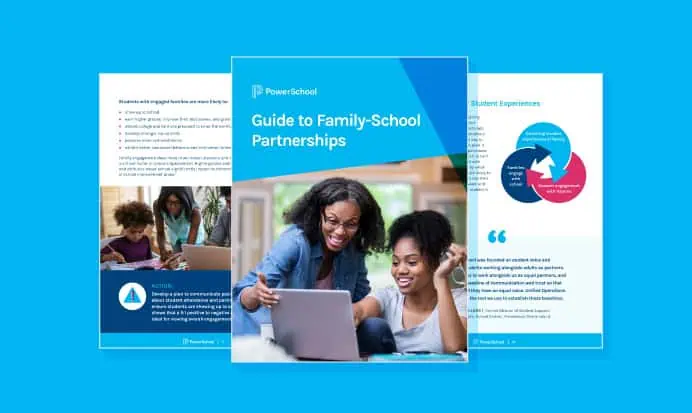
Guide to Family-School Partnerships
Learn how to make every parent a partner in their student’s academic achievement.
Get the Guide