

Improve Chronic Absenteeism with a Comprehensive Tool That Tracks Attendance, Offers Analytics, and Engages Families
One in every seven students struggles with chronic absenteeism, meaning they miss 15 or more days in a school year. And more than just missing out on vital everyday learning, those students also end up with lower test scores, delayed or atypical social and emotional development, and increased risk of dropping out of school, among other impacts.
As proof, graduation rates have dropped for the first time in 15 years—and attendance is the leading indicator of graduation.

In this new resource, the K-12 Attendance Intervention Toolkit, we look at how to address chronic absenteeism with tools and strategies that help engage families, facilitate attendance interventions, and get students back into class.
Below are some of the highlights of what the new toolkit covers.

Attendance Interventions: Why They Matter and How Tools Can Help
Attendance is one of the most critical factors in student success. Students in your physical or virtual classrooms benefit from the learning plans, instructional materials, and education software. And if you can improve attendance rates, you can help ensure better academics and graduation rates.
Schools use attendance interventions to address both absenteeism and chronic absenteeism as a proactive tactic with actions appropriate to the level of a student’s absenteeism. A three-tiered approach called the “Tiers of Intervention” model has been established as the national standard for attendance data management by Attendance Works.
To facilitate successful attendance interventions, an attendance intervention and management tool can help automate and streamline fundamental tasks. When equipped with a comprehensive tool, you can reliably monitor attendance. You can also streamline your processes by automatically sending attendance notifications home via text or email.
The K-12 Attendance Intervention Toolkit further explains how you can use an attendance intervention tool to help:
- Automate easy-to-understand data-driven attendance interventions and attendance communications
- Use research-informed practices proven to specifically improve attendance at schools and districts
- Provide everyone equal ability to spot early warning signs and determine appropriate interventions

What to Look for in a Modern Attendance Intervention System
The K-12 Attendance Intervention Toolkit covers key features and functionality to look for in a modern system that can meet your specific school or district needs.
For starters, you need a complete attendance management system. More than a product that focuses only on communication and engagement, a comprehensive tool allows you to analyze attendance trends and enables more effective interventions with equitable communication.
A tool with the ability to see attendance data analytics and visualizations will help inform data-driven interventions. You should also be able to implement research-based, data-driven interventions. Access to accurate, timely data can help ensure effective attendance interventions.
Additional “must haves” for a modern system are included in the complete toolkit.

Attendance Teams: How to Make Them More Impactful
Attendance teams are becoming more prevalent in addressing chronic absenteeism through positive approaches instead of punitive measures focusing on the negative. An attendance team is a focused group of representatives from several key areas in a student’s life.
The team meets regularly and identifies students with excessive absences. They use all available resources to help those students develop a consistent routine for getting to school.
The K-12 Attendance Intervention Toolkit looks at ways to make your attendance teams more effective. You’ll learn how to ensure you include the right stakeholders as members and what to discuss on your agenda.

What Is the Family’s Roles in Improving Student Attendance?
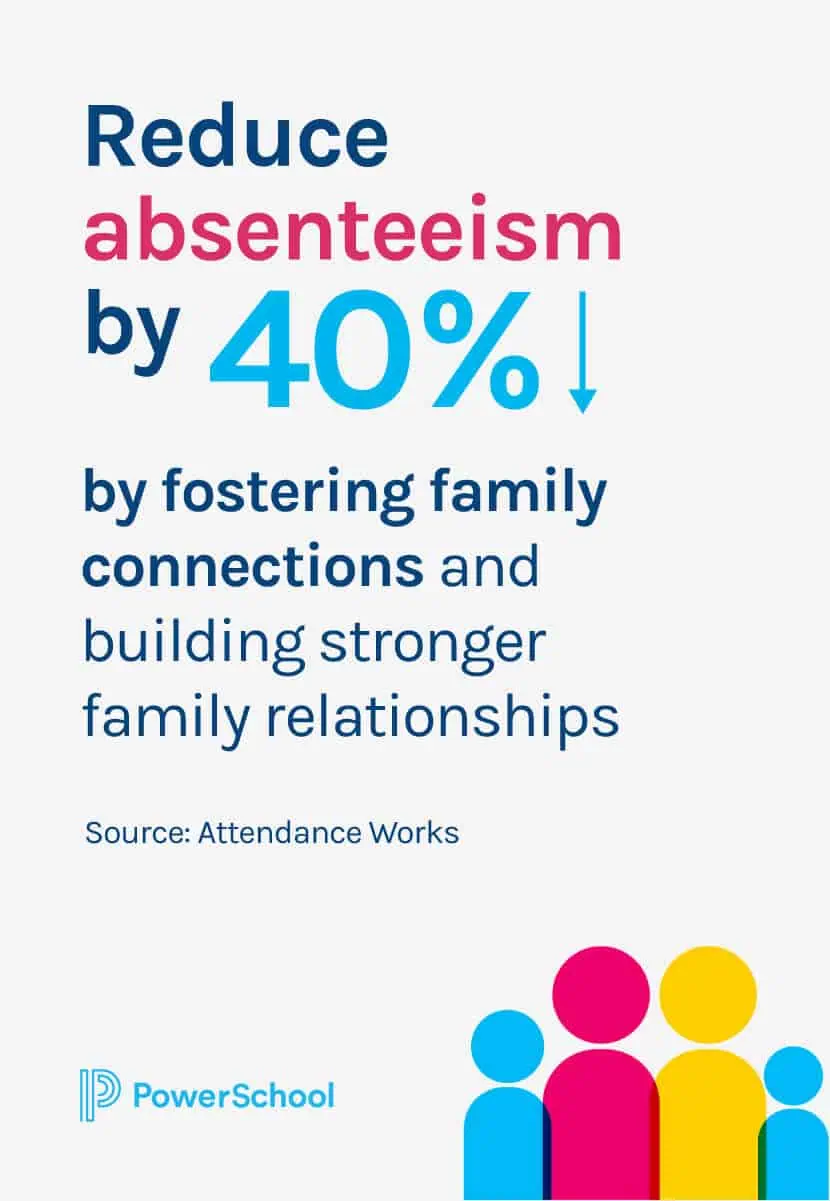
Families within your school or district can significantly influence their student’s academic and overall success. Student absenteeism is reduced by 40% when schools foster connections and build stronger relationships with families. In a supportive and caring home environment with engaged parents, students are “less likely to become involved in substance abuse, violence, and other problem behaviors,” according to the American Psychological Association.
While engagement can take many forms, at its core is the fundamental principle that regular, ongoing contact through two-way conversations between schools and families builds a relationship where each relies on the other as a valuable resource.
The right attendance intervention system can help you with that. In the K-12 Attendance Intervention Toolkit, you’ll learn more about the importance of communication tools with multiple ways to connect with families as well as how that engagement can affect your interventions.

K-12 Attendance Intervention Toolkit
Download the toolkit to get information you can use to build an effective attendance intervention and management system, reduce chronic absenteeism, and get students back in the classroom.
Get Your Copy

