The pandemic affected students’ academic success more than we thought. The latest National Assessment of Educational Progress (NAEP) National Report Card showed that we lost nearly twenty years of progress in advancements in student learning. The results show declines in math and reading scores for fourth and eighth graders across the United States.
Even internationally, there was a significant impact on student learning and well-being. A recent McKinsey report showed that, on average, students globally are eight months behind in their learning because of the pandemic. This impact varies widely. Students in Latin America and South Asia are an average of 12 months behind, while those in North America and Europe are an average of four months behind. The report also notes broader social and emotional impacts on students globally, including rising mental health concerns, teenage pregnancy, obesity, chronic absenteeism, dropouts, and reports of violence against children.
Now, states and school systems are trying to evaluate unfinished learning and quickly find solutions to close these gaps.
In this blog, we’ll learn how using data to show the whole child can help advance student learning. We’ll also look at how important engagement and technology are in implementing these solutions.
Understanding the Challenge of Managing Student Data
Teachers need data and systems that make it easy to monitor student progress and personalize their learning experience. However, according to our 2022 Education Focus Report: Top District Priorities and Shifts in PK-12 Education, over half of classroom educators believe that there’s too much student learning data, and they don’t have enough time to analyze it to improve instruction quality. To get the full picture, educators often create spreadsheets that collect data from several sources. But this process is highly manual and time-consuming. It takes away from interpreting and using the insights. That’s why educators and administrators need a single source of information.
Leah Sparks, Executive Director of Technology, discusses how Kanawha County Schools leverages technology to make sense of student data and create strategic goals to advance student progress.
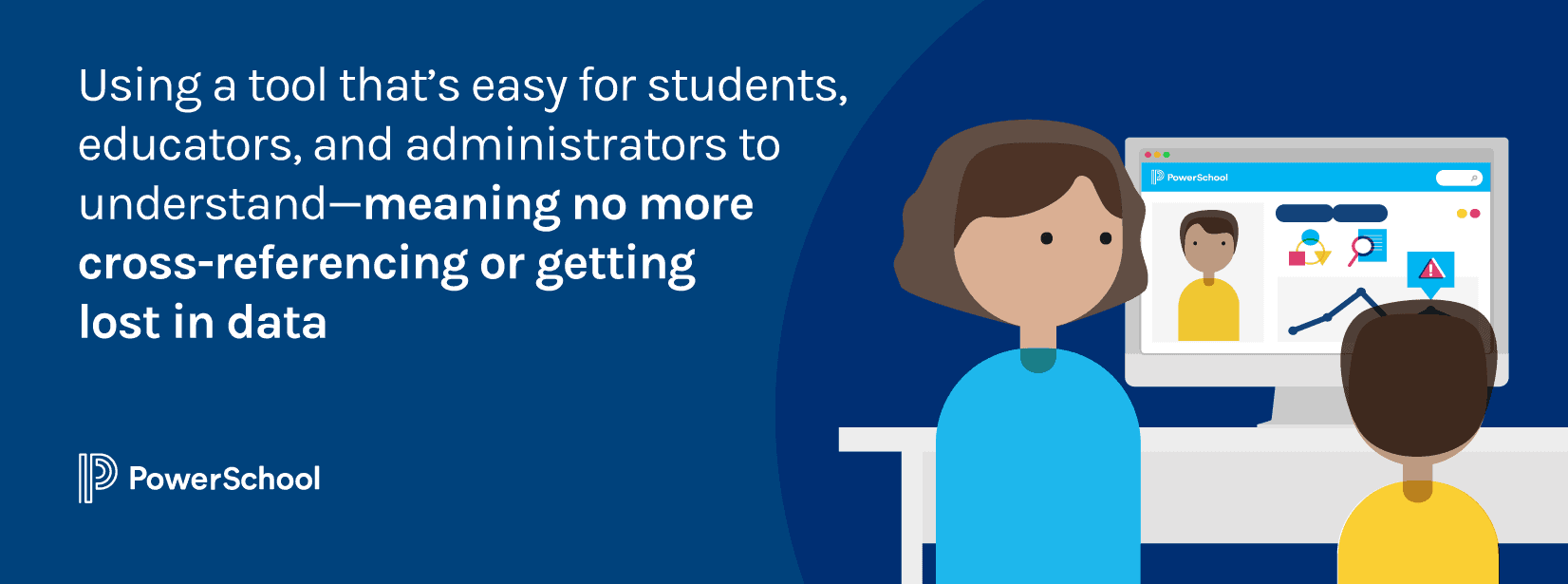
Using a tool that’s easy for students, educators, and administrators to understand—meaning no more cross-referencing or getting lost in data—allows educators and administrators to have a clear picture of where students are and set strategic goals. “We’re setting those goals that come back to making sure that what we’re doing is what’s best for kids and that they’re learning and growing,” she says. Being purposeful with their data has led to consistent progress for Kanawha County Schools district.

Improving Student Outcomes is More Than Academic Performance
Supporting long-term student outcomes means focusing on more than test scores and attendance. In the 2022 Education Focus Report, most educators identified whole-child education as “fundamental” to student learning and development. By paying attention to a student’s social and emotional well-being, teachers can spot potential issues early and provide personalized support. Encouraging students to develop self-confidence, positive relationship skills, and a growth mindset sets them up for success.
Watch Leah Sparks talk about how viewing the whole student—class performance and their social and emotional learning (SEL) data—is critical to supporting their needs.
It’s essential to have tools and systems that make it easy to measure student well-being. “They’re not going to be able to learn the math and the English if they’re not well socially and emotionally,” she says.
“We know a lot of times in the school systems, we have some data over here and some data over here and some data over here, and it takes forever to see the whole picture,” she says. Consolidating all data in one place helps schools implement a whole-child approach more efficiently.
Why Parent Engagement is Important to Student Success
Partnering with parents is one of the best ways to promote SEL in schools. Parents can work with teachers to support positive student learning habits at home, such as time management and persistence. Parent involvement helps keep students on track, which results in better attendance, fewer missed assignments, improved test scores, and increased grade point averages. Active and engaged parents make for active and engaged students who complete their schoolwork, go to class, and ultimately learn more.
The 2022 Education Focus Report findings demonstrate how much educators value parental involvement and partnership in reversing recent declines in student engagement. Many reported that parent and family engagement is the same or a higher priority now than at the height of the pandemic.
Districts like Kanawha County Schools are enthusiastic about strengthening school engagement after the pandemic. A recent U.S. Department of Education report shows that more than 75% of districts are using federal COVID-19 emergency funding for student re-engagement strategies.
Watch Leah Sparks share how her district is engaging students and parents and why it’s so important for student success.
“It’s really about developing those relationships, so that you know what the needs are,” she says. Then, “you can find resources to help address those.” Strong relationships are possible when teachers are easy for parents to reach, the communication process is seamless, and the district provides tools, resources, and opportunities to facilitate collaboration.

Advance Student Learning with Integrated Technology
While much has improved since the spring of 2020, learning loss—especially in math and reading—will continue to grow if educational gaps remain unaddressed. Using a whole-child approach is critical to minimizing unfinished learning and increasing student progress.
This process begins with administering assessments to identify learning gaps and assess student social-emotional well-being, then using that data to develop relevant curriculum, inform instruction, and implement whole-child supports. Pair that with integrated technology that works seamlessly to help identify and address learning gaps as well as manage behavior, and you get a simple and effective workflow that can improve teaching and learning.

Support the Whole Child
Learn how the PowerSchool Student Success Cloud can help you effectively manage attendance, school climate and culture, and MTSS to achieve more equitable outcomes.
Learn More