

Leading with social and emotional learning from the first day of school helps support the whole child
What It Means to Lead with Social and Emotional Learning
As summer gives way to another year of uncertainty in the educational landscape, proactively leading with a social and emotional learning (SEL) curriculum that helps students feel safe, secure, and self-regulated will be more critical than ever.
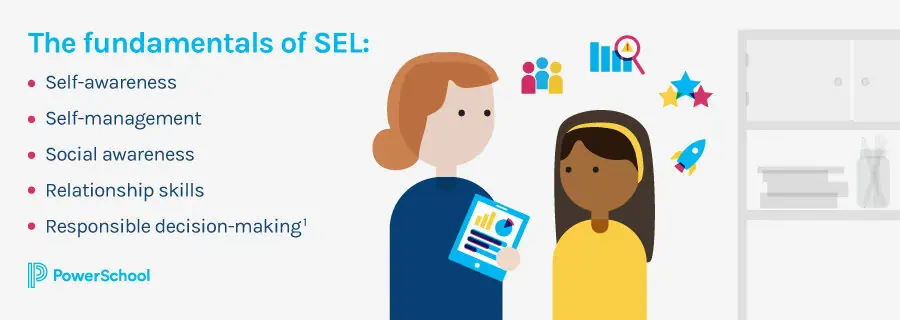
But what does it mean to put SEL first? Putting SEL first means that, from the first day of school, our most important task is to create a space of sharp focus around the fundamentals of SEL—self-awareness, self-management, social awareness, relationship skills, and responsible decision-making.
The Classroom Culture: Putting Students First
Although there are various SEL models, frameworks, and state initiatives, the five core competencies of the CASEL framework are the gold standard. The classroom offers a space to focus on the academic curriculum and student expectations, making it the first critical setting for SEL. Leading with SEL means putting classroom culture and each student’s place within it at the center. The most impactful SEL is implemented across classrooms and grade levels and is adequately supported and tracked by school and district leadership from day one.
SEL Inside and Outside of School
There are excellent resources that provide in-school, lesson-based curricula, and several in-school, non-curricular approaches, like this report from the Wallace Foundation that supports SEL at the pre-school, elementary, and middle school levels.
The Caring School Community program is an excellent example of an outside-of-school initiative that focuses on building classroom community, setting class norms and goals, building social skills, and helping students learn to make decisions and solve problems related to classroom life. This program resulted in increased positive behaviors, decreased delinquent behaviors, and achievement gains in reading and math, among other positive outcomes.2
Out-of-School Time, or OST, programs also hold promise for effectively leading with SEL. These programs, like Girls on the Run or WINGS for Kids, are usually after-school groups that meet regularly—often daily—during the school year and combine explicit SEL curriculum with games, activities, snacks, and community service projects.
However, it’s important to note that “formal” programs are not necessary for impactful SEL. Many partnerships with SEL outcomes built into the purpose can help students develop stronger relationships, develop positive feelings about themselves, and be better prepared for post-secondary opportunities. With appropriate levels of oversight and prior permissions in place, programs like these become a crucial part of our approach to social and emotional support for our students as they encourage real-world conversations.
Involve Parents in SEL
One of the best ways to lead with SEL is to reinvigorate and maintain your relationship—preferably partnership—with parents. Start by communicating your SEL strategy at the beginning and throughout the school year, laying out how you will support specific initiatives, asking them what skills they feel are most important for the school to teach, and continually providing them with opportunities to volunteer.
If a positive behavioral interventions and supports (PBIS) program is already part of your social and emotional learning or multi-tiered systems of support (MTSS) portfolio, think of ways to bring families and parent organizations into active participation in line with that initiative. If parents and families express a desire to use more SEL outside of school, encourage them and engage them in discussing how to bring SEL home. Anything the school can do to promote positive behaviors and strengthen families directly impacts student outcomes.
Blended Learning and SEL
Remote learning has presented near-universal challenges for educators. In some cases, fully remote learning has transitioned to in-person instruction or a blended learning approach, making this an especially meaningful time to lead with SEL. For educators planning blended learning, try scheduling either rotation time, “home base” time, or a dedicated period for SEL and building relationships, both peer to peer and peer to adult. Show students and families that this time will be prominent and protected as part of any blended learning strategy at your school—they’ll see it and feel it on the first day of school.
Leverage Your Learning Management System for SEL
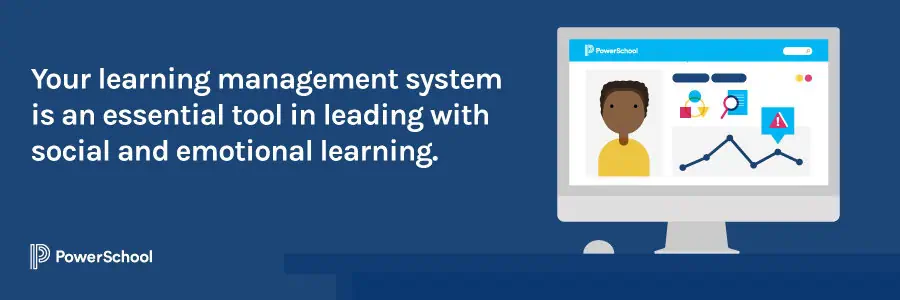
Your learning management system (LMS) is the digital space where curriculum and relationships intersect, making it an essential tool in leading with SEL, particularly in a blended or fully remote learning environment. For example, a school could decide on responsible decision-making at the secondary level as an SEL goal. Teachers might choose to incorporate information on digital decision-making and digital citizenship as part of this initiative. Teachers could curate, store, and provide digital citizenship resources via the LMS and launch an asynchronous discussion board about what elements students would like to include as classroom online behavior guidelines. Then, during a “soft start” or other designated meeting time, teachers and students could collaborate to refine, publish, and collectively commit to the final list, setting the SEL tone for the rest of the year.
Welcome the Whole Child Back to School
As some students and families are transitioning from remote learning to blended learning this fall, and others are returning to in-person instruction or continuing the learning at home, one of the high-priority initiatives will be to focus on the whole child by leading with SEL. In this unprecedented time, it’s more important than ever.