Some things in life are just better with a plan—and a career is definitely one of those things. Think about it like a dinner party: When you wait until the last minute to choose a recipe, shop, and cook, you feel stressed and unhappy. But when you plan the meal and leave plenty of time for shopping and preparing, the experience is rewarding and enjoyable. It’s the same, though with much higher stakes, with a career. Planning leads to better results.
How can you cultivate career interests of students?
Fostering students’ career interests can be done with a variety of strategies and approaches, including encouraging self-reflection, offering career counseling, inviting guest speakers, organizing career fairs, facilitating internships or work-based learning opportunities, incorporating experiential learning in curriculum, creating networking opportunities, organizing field trips, and providing career exploration resources.
What’s most important is that students are exposed to a wide variety of possible career paths. Giving them access to as many resources as possible broadens their understanding of who and what they can be.

The Ultimate Guide to P20W Cradle-to-Career State Data Systems for Educators and State Policymakers
DownloadWhat is student career planning?
For students, career planning is an intentional and evolving practice. Its purpose is to illuminate a path toward a desired career, accounting for changes of mind and heart along the way. Career planning should be a dynamic process, with room for ideas and goals to shift, but it is also concrete in that the ultimate point remains fixed on helping the student plan for the training and milestones that will lead to success in their chosen career.

5 Ways Career Education and Planning Benefit Students
Career education and planning offer numerous benefits for students, helping them make informed decisions about their future and prepare for professional success. Career education and planning help students:
- Better understand themselves. When students take the time to think about what they value, what they’re passionate about, and how they want to spend their time, they’re able to articulate their core identity. This self-awareness primes students for lifelong growth and development.
- Connect academics with the “real world.” Students often have a hard time taking what they’ve learned in the classroom and applying it to scenarios outside of school. Career education helps students understand how their coursework and their extracurriculars indicate their strengths and guides them toward a meaningful future.
- See the full range of available professions. Careers in medicine, law, business, and technology are well-known to students because it’s what they encounter in their environment and in the media. Without career education and planning, students might choose a professional path simply because it’s familiar, not because it’s well-aligned with their interests, skills, and values.
- Anticipate additional education or training. Many careers require certifications or degrees which cost money, have entrance requirements, and possibly involve standardized testing or additional application criteria. The sooner students know what will be required of them in their chosen career, the better they can plan to follow that path.
- Feel confident and motivated. We produce our best work when we’re pursuing a goal or objective. Students knowing that what they’re doing is purposeful and connects to their future helps boost their commitment to learning and achievement.

Discover students’ top priorities for postsecondary planning so you can better support their needs.
Download the 2023 Naviance Student SurveyExploring Student Career Interests Throughout K-12
There are many components to a student career plan. Ideally, career exploration begins in elementary school and evolves in breadth and depth as students mature and begin to better understand their strengths and interests. Some elements, such as the college and career readiness standards, may already be integrated into a school’s curriculum and will therefore ensure necessary progress in areas like math and English. Student career planning also requires a focus on career readiness and mastering the five most important career readiness skills, as well as refining social and emotional skills as part of a college, career, and life readiness curriculum.

Supporting Career Interests of Elementary Students
For elementary students, career exploration should focus on sparking curiosity, showcasing professional paths, and growing self-awareness. While career exploration at this stage is more about fostering a love of learning, there are several age-appropriate activities to support budding interests.
- Invite community members, parents, or other adults connected with the school to speak with students about what they do and how they arrived at their career.
- Expose students to science, art, technology, music, sports, and other fields to spark their curiosity.
- Plan field trips to businesses, museums, zoos, and other places where students can see professionals in action and learn about their work.
- Engage students in hands-on projects and activities, such as simple science experiments.

Supporting Career Interests of Middle School Students
Supporting the career interests of middle schoolers helps them develop a sense of direction and purpose as they transition into high school and begin thinking more seriously about their futures. Here are some strategies for supporting their career interests:
- Organize career exploration programs or workshops that introduce students to various career paths, and highlight the educational requirements, skills, and opportunities for advancement for each.
- Use interest assessment tools or inventories to help students identify their strengths, interests, and values.
- Establish a mentorship program where students can connect with high school or college students who share similar interests.
- Assign research projects that require students to explore a specific career or industry and present their findings to their peers.
Supporting Career Interests of High School Students
As the transition to higher education and the workforce approaches, it’s natural for students to feel some anxiety about their futures. Helping students manage that anxiety by creating a plan that centers on their values and goals helps students feel more confident in thinking about careers.
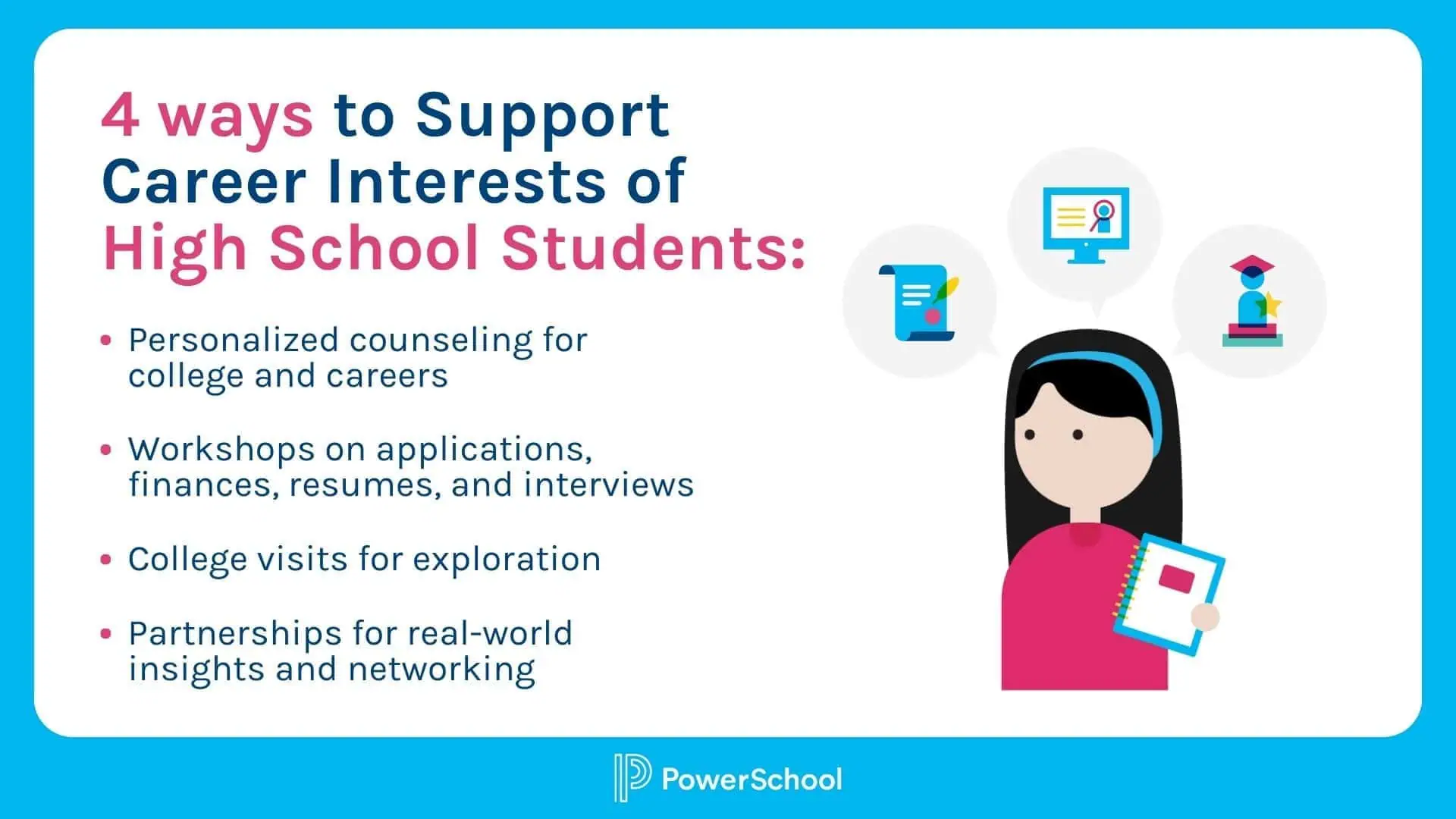
- Provide comprehensive college and career planning with counselors who work one-on-one with students to explore their interests, aptitudes, and career goals. Personalized attention helps ensure that each student is moving toward a future they feel excited about.
- Host workshops that cover topics such as college applications, financial aid, resume writing, interview skills, and job searching strategies. These workshops prepare students for the next step in their education or careers.
- Arrange college visits or campus tours to help students explore higher education options and get a feel for a campus environment.
- Form partnerships with local businesses, industries, and professional organizations to provide students with insight into real-world job opportunities and networking opportunities.
4 Ways Schools Can Support Career Interests of Students
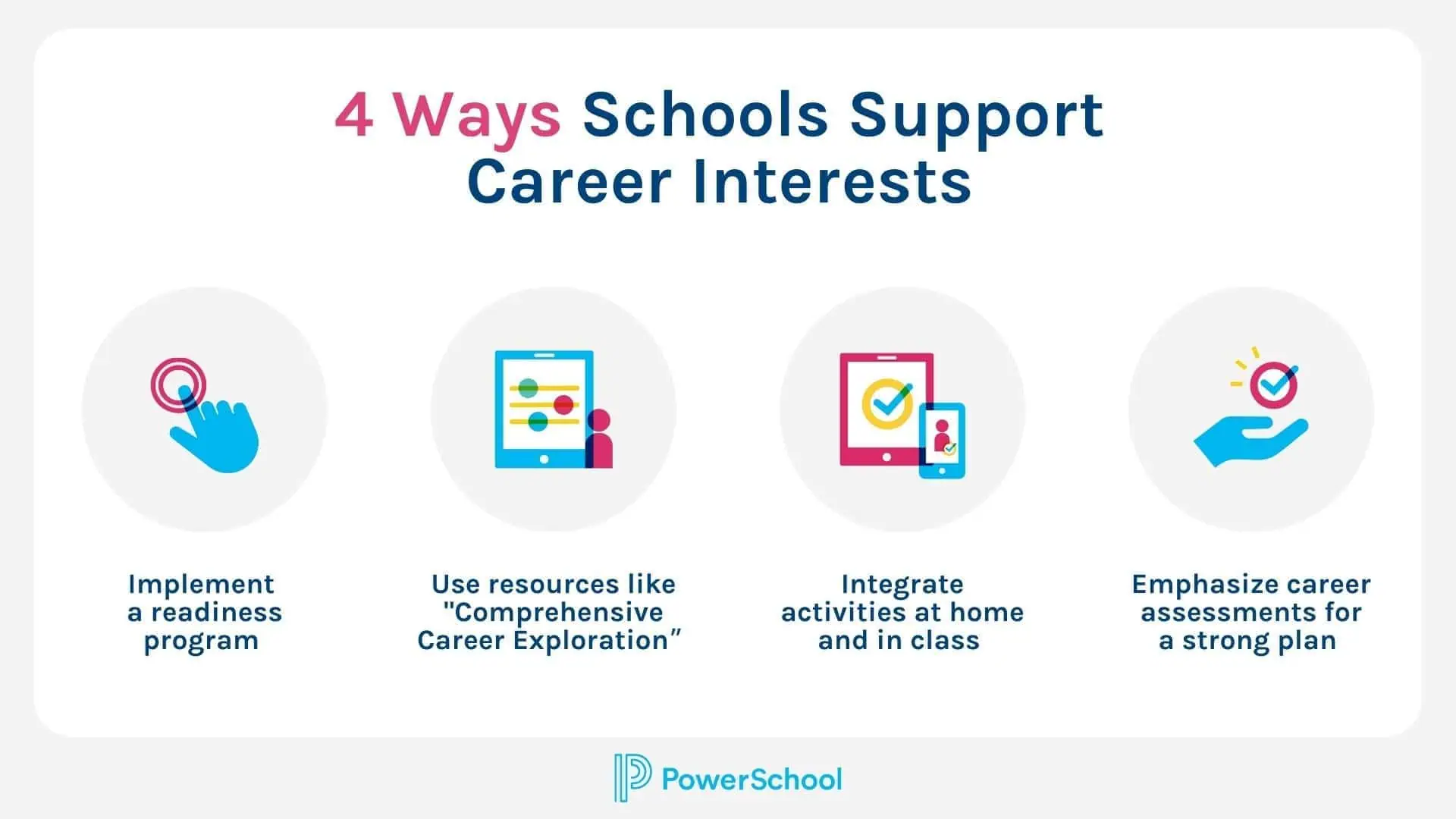
- Every school should have a college, career, and life readiness program. This invites students to think about their skills and interests, use self-assessment tools to discover how their strengths align with specific career paths, and plan for whatever future education, training, or licensure is necessary to follow their chosen career.
- Resources such as A Comprehensive Approach to Career Exploration help schools and districts learn how to apply career exploration frameworks for students of all ages that help them stay engaged in their learning and curious about the opportunities that await.
- Career exploration activities can be done at home or in the classroom, and they should be a part of every student’s career planning process. By doing these, students develop a deeper understanding of what careers they like, why they like them, and how they can one day be successful in them.
- Finally, career assessments are critical. When combined, career readiness, career exploration activities, and career assessments form the foundation of a strong career plan—and together help light the way forward to success.
How does PowerSchool Support Career Interests of Students?
There are also lots of things students can do at home to get started on their career plans. PowerSchool Naviance CCLR offers many tools, including five self-discovery assessments, and can make the process of planning a career fun and exciting. Students can also get out a pen and paper and start their plan by writing down their ideas, hopes, and dreams for their future, and then begin researching the kinds of jobs, salaries, and work schedules that would support those goals. Another way to get started is to identify a hero or person with an amazing job, and then find out about the path that person took to get there.
For schools and districts, PowerSchool offers the Workforce Development Cloud, which empowers students with the skills, knowledge, and confidence they need to excel in their educational journey and the job market. The Cloud drives postsecondary readiness and workforce success by delivering personalized postsecondary planning options, supporting education and workforce alignment, and improving student readiness. You can watch a demo of the Cloud here.
Supporting the career exploration and interests of students of all ages involves providing them with a broad range of resources, guidance, and opportunities to help them make informed decisions about who they want to be and how they plan to get there.
See career planning in action.
Get a preview of how our solutions can help your students chart their postsecondary path.
Request a Demo