It’s challenging for a teacher to find the time to make parent phone calls after a long day in the classroom, with grading and lesson planning still left to do. There is often no opportunity during the day to write notes home and update charts with individualized grades for each child. But communicating with parents is an important component of the learning experience.
When multiple people are involved in a student’s learning, the student is more likely to be successful. Building a team to support a student starts with trust and open lines of communication. Communication is the foundation of parent and teacher relationships. Teachers must find efficient and creative ways to communicate with parents. Parent involvement connects parents to classroom teachers across all grades and ultimately supports learning for all children. To communicate effectively and efficiently, teachers can use different tools to structure their feedback to parents.
Why parent-teacher communication is important
Teacher-parent communication is critical for a student’s academic and social success. Parental involvement requires teachers and parents to connect regularly, allowing parents to be involved in school learning while teachers can gather information about the student outside the classroom.
Parent involvement is also a key element in advancing school culture and helps parents and teachers develop a relationship in and out of the classroom. Open communication lines help teachers share good feedback and constructive suggestions with families.
Parent-teacher communication strategies
Students feel supported when both their parents and teachers are involved in their education, which in turn encourages positive school behavior. This intentional support for students also has an impact on academic achievement.
Building parent-teacher relationships takes work and can be time-consuming. That’s why we’ve gathered some efficient and effective ways for teachers to communicate with parents so that both parties are knowledgeable about a student.
Verbal and written communication
Effective communication is the most important point between parent and teacher relationships. The classroom teacher can leverage parental involvement to connect parents to their child’s education. Here are some ways parents and students can begin to build their relationships with the teacher by relying on verbal and written forms of communication.
- Annual open houses—This annual school event allows for parents to meet teachers and learn about classroom structures, homework, and behavior expectations. During this time, parents can learn more about their student’s classroom environment and begin to develop an understanding of the experience of being in class.
- Parent-teacher conferences—These meetings between guardians and teachers are a great way to report student progress and allow time to ask student-specific questions. Parent-teacher conferences can be set up during different times of the year or centered around grade level milestones like report cards or testing.
- Parent-teacher association group—These groups connect parents and children to the school community. They serve as support for school leadership, and they work towards facilitating positive relationships between parents and teachers. Pro tip: Create parent-teacher groups that welcome all families and are thoughtful and inclusive about ways to keep families engaged.
- Phone calls and emails—Phone calls and emails are a quick and convenient way to connect parents and teachers. Calls and emails can be scheduled for extended conversation or can be good for a quick connection. Pro tip: Don’t always make calls or send emails for negative behaviors. Reward students by complimenting their positive behaviors or contributions to the class.
Digital communication
Communication tools and apps like PowerSchool Behavior Support offer a few ways for teachers to communicate student progress with parents. Digital parent-teacher communication uses technology in education spaces to share information.
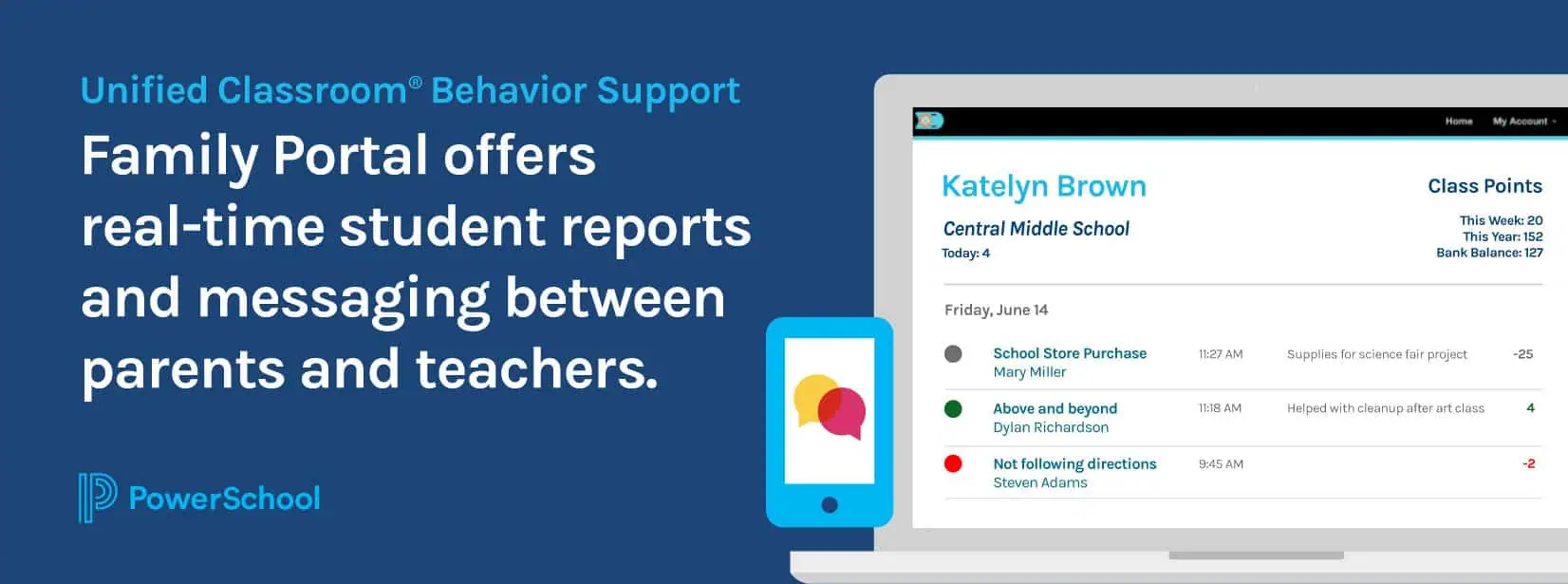
- Family Portal—This portal provides parents with student reports in real-time. Teachers can share student information and exchange messages via computer or mobile devices.
- Social media classroom page—Having a social media page allows teachers to post announcements and content for parents to access on their own. Teachers can present important documents or materials and communicate with families.
- Student behavior reports—This digital document can be used to update parents on student behaviors and progress. It is consistent with the PBIS incentives for students. Each school staff person with access to the reports can add details about the student throughout the day. Parents then know what is going on with their child or children and can monitor behavior and progress.
- Student agendas—Student agendas can be digital tools that are emailed to parents weekly so that parents stay current with their student’s workload. This agenda also provides structure to student learning. Elementary school teachers use agendas or lists so that students are clear about what to expect for the day, helping to manage behavior and classroom expectations.
- Classroom website—Classroom websites can connect students and families with information. Social media websites, student agendas, and other key information can be shared and visible to all. Teachers can communicate to individuals on classroom progress, projects, and school information. Some websites also include a parent-teacher communication portal for direct communication access.
- Recording a podcast—This audio platform will inform parents about grades, homework, and class projects and will benefit families who want to learn from each other. Parents will not have to wait for their kids to share their lessons because they can hear about it on the podcast. The podcast can also include school announcements and updates on student work.
Strive to create a relationship
When planning actual communication strategies or ways to increase family involvement in elementary school programs, parent partnerships are important for supporting classroom work. These partnerships might include volunteer hours, contributing supplies, or even supporting class learning by participating in a lesson. Most parents are very interested in their child’s education, and regular communication between the educators and parents is a great benefit.
If a student is having a challenge in school, teachers and parents can work together because they have already developed a relationship that allows them to collaborate on interventions. Educators can set an example of communication strategies that will positively impact student learning, class behavior, and academic achievement (including homework and lessons) through effective communication. School leaders can champion this communication work by also engaging with families. School leaders who are thoughtful about the school culture and climate can leverage some of these practices to engage families.

Engage with families
Discover how PowerSchool Behavior Support can help strengthen the partnership between teachers and parents to optimize student success.
Schedule a Demo