

In the rapidly evolving landscape of education, technological advancements are reshaping the way we teach and learn. Among these innovations, artificial intelligence (AI) stands out as a powerful tool with the potential to revolutionize education in profound ways. However, like any transformative technology, AI in education is often shrouded in misconceptions and apprehensions. Many administrators, teachers, families, and students are wondering, “What are the advantages and disadvantages of AI in education?”
In this blog, we’ll debunk five common misconceptions about AI in education. From concerns about job displacement to challenges in building AI cultures at the district level, we’ll unravel the myths and uncover the truth behind AI’s transformative potential.
Misconception #1: AI May Threaten Teachers’ Jobs
With the growing usage of AI in schools and districts, fears of automation replacing human roles have surfaced, particularly concerning the indispensable profession of teaching. However, this fear often stems from a misunderstanding of the potential role AI plays in education.
AI isn’t positioned to replace teachers; rather, it can act as a valuable ally, enhancing educators’ capabilities and streamlining administrative tasks. Everything from answering emails to grading papers adds up: A typical teacher works about 54 hours a week—with just under half of that time devoted to directly teaching students. By automating routine tasks like grading, AI liberates educators to focus on what truly matters: fostering critical thinking, creativity, and personalized learning experiences. There are both advantages and disadvantages of AI for students in this case: while they’ll quickly receive feedback on assessments, that feedback may lack the nuanced understanding and instruction provided by teacher comments.

Consider AI as a digital assistant in the classroom, not a substitute for human interaction. It augments the teacher’s role by providing valuable insights into student progress, adapting learning materials to individual needs and even offering real-time feedback. This symbiotic relationship between AI and teachers cultivates a more dynamic and engaging learning environment.
Furthermore, AI empowers educators by offering professional development opportunities through personalized learning platforms and access to vast repositories of educational resources. Rather than rendering teachers obsolete, AI equips them with the tools to evolve and thrive in a digitally driven educational landscape.
By dispelling the myth of AI as a threat to teaching jobs, we can embrace its potential to revolutionize education, creating a future where teachers remain at the forefront of inspiring and shaping young minds and hopefully reduce that 54-hour week to a more reasonable 40-hour week.
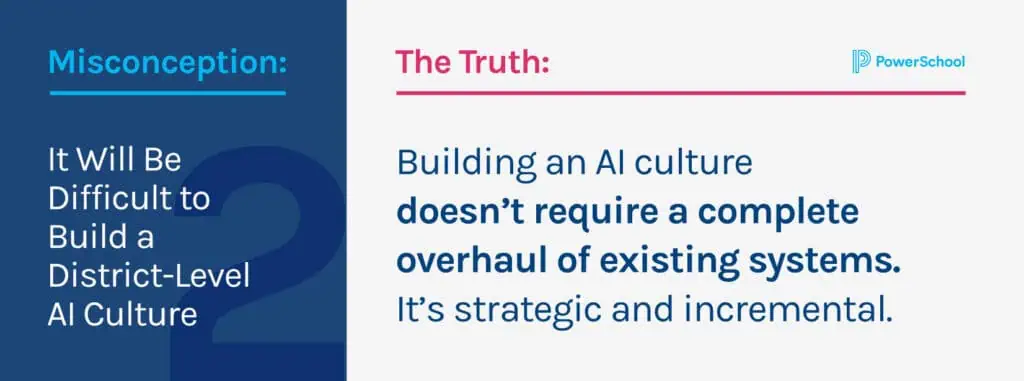
Misconception #2: It Will Be Difficult to Build a District-Level AI Culture
Navigating the integration of AI into schools and districts can seem like a daunting task, often hindered by misconceptions about its complexity and feasibility. However, understanding where districts stand on their AI readiness journey is crucial for dispelling these misconceptions and fostering a culture of innovation.
The misconception arises from a lack of understanding of the potential benefits and strategies for AI implementation. Contrary to popular belief, building an AI culture doesn’t require a complete overhaul of existing systems. Rather, it involves a strategic and incremental approach focused on assessing the district’s current state of AI readiness.
Successful integration begins with districts understanding their strengths, weaknesses, and opportunities regarding AI adoption. This entails conducting a comprehensive assessment of existing infrastructure, technological proficiency, and organizational readiness. By gaining clarity on their current position on the AI readiness spectrum, districts can develop tailored strategies and action plans for effective implementation.
Moreover, investing in professional development and training programs is essential for empowering educators and administrators to navigate the complexities of AI integration. By providing opportunities for upskilling and fostering a culture of continuous learning, districts can ensure that stakeholders feel confident and competent in leveraging AI to its fullest potential.
Additionally, fostering a culture of collaboration and knowledge-sharing is key to overcoming the challenges associated with AI adoption. By promoting open dialogue and sharing best practices, districts can harness collective expertise to identify opportunities for innovation and improvement.
By dispelling the myth of the difficulty surrounding AI integration and focusing on understanding where districts stand on their AI readiness journey, education stakeholders can embrace AI as a catalyst for positive change. With the right mindset, strategies, and support systems in place, building an AI culture within districts can pave the way for a more equitable, personalized, and effective educational experience for all students.
Misconception #3: Parents Fear AI Will Replace Hands-On, Human Instruction
In the realm of education, parental concerns about the integration of AI often revolve around the fear of losing the human touch in teaching. However, it’s crucial to recognize that many parents are open to the idea of AI positively impacting their child’s education, with 54% believing it could potentially have a positive effect. It’s important to remember that, despite advancements in AI, the human element in education remains irreplaceable.
Parental concerns about AI replacing hands-on teaching stem from a desire for their children to receive personalized attention and nurturing from educators. However, parents need to understand that AI in education isn’t about replacing teachers but rather enhancing their capabilities and facilitating more personalized learning experiences for students. While AI can offer valuable support in areas like grading and providing feedback, the role of the teacher as a mentor, guide, and facilitator of learning remains paramount.
It’s important to acknowledge, however, that there are both advantages and disadvantages of AI for teachers. The traditional role of a teacher as the profession has always understood it may shift, with teachers becoming more like facilitators or guides rather than traditional instructors, requiring changes in their approach to teaching.

At PowerSchool, we prioritize a human-centered AI approach at the core of our guiding principles. Our AI solutions are designed to complement and amplify the efforts of educators, not replace them. By leveraging AI to streamline administrative tasks and provide insights into student progress, teachers can devote more time and attention to nurturing students’ social-emotional skills, critical thinking abilities, and creativity.
Moreover, AI can facilitate hands-on learning experiences by providing access to interactive simulations, virtual laboratories, and educational games. These immersive learning opportunities not only complement traditional teaching methods but also foster curiosity, exploration, and critical thinking skills in students.
It’s essential to recognize that AI is not a substitute for human interaction in education but rather a valuable supplement that enhances the teaching and learning experience. By dispelling the myth of AI as a threat to hands-on teaching, parents can embrace its potential to enrich their child’s education and prepare them for success in an increasingly digital world.
Misconception #4: Using AI Is Cheating
One prevailing misconception surrounding the integration of AI in education is the notion that using AI tools equates to cheating. This misconception often arises from concerns about academic integrity and the fear that AI may facilitate plagiarism or undermine the authenticity of student work. In fact, 65% of teachers express concern about plagiarism in essays or work from students.
However, it’s important to distinguish between the ethical use of AI as a tool for learning and its misuse as a shortcut for academic dishonesty. AI can play a constructive role in education when used ethically and responsibly, empowering students to develop critical thinking skills, deepen their understanding of complex concepts, and enhance their creativity.
Clear communication about AI usage in the classroom is crucial. Schools should create a rubric to define when AI is acceptable and when it is not, and instruction should evolve to make the most of AI, focusing on teaching students to apply information in meaningful ways. When properly integrated into the learning process, AI tools can assist students in conducting research, organizing information, and generating ideas, thereby fostering a more collaborative and iterative approach to learning.

For instance, PowerSchool’s AI assistant for students, Schoology PowerBuddy for Learning, guides students rather than providing direct answers. By prompting students with thought-provoking questions and encouraging critical thinking, PowerBuddy helps students develop problem-solving skills and fosters a deeper understanding of the subject matter.
Moreover, AI has been shown to improve educational outcomes in the classroom, with 55% of teachers acknowledging its positive impact. By leveraging AI-powered tools, educators can personalize learning experiences, provide timely feedback, and identify areas for intervention, ultimately enhancing student engagement and achievement.
By dispelling the myth that using AI is cheating and emphasizing its potential to enhance learning and promote academic integrity, educators can empower students to harness the power of AI as a tool for learning, creativity, and innovation. When used responsibly, AI can be a valuable ally in preparing students for success in the digital age.
Misconception #5: AI Isn’t Secure
One prevalent misconception surrounding the integration of AI in education is the concern that AI technologies may compromise data security and privacy. In a landscape where data protection is paramount, educational institutions rightfully seek assurances regarding the security of AI solutions.
However, it’s crucial to recognize that not all AI solutions are created equal when it comes to security. The traditional approach of “pushing your data to AI,” ubiquitous with AI vendors today, implies relinquishing control and transparency, potentially at the expense of security and privacy. On the other hand, PowerSchool’s approach of “bringing AI to your data” represents a more empowering and responsible alternative.
To ensure the security of AI solutions, educational institutions must ask the right questions when evaluating AI vendors. These questions may include inquiries about data encryption protocols, access controls, and compliance with relevant privacy regulations such as GDPR and FERPA.
Moreover, transparency and accountability are key factors in assessing the security of AI solutions. Educational institutions should seek vendors who are forthcoming about their security measures and are willing to provide assurances and certifications regarding data protection.
By partnering with trusted vendors like PowerSchool, educational institutions can leverage AI technologies with confidence, knowing that robust security measures are in place to safeguard sensitive information. Additionally, by asking the right questions and prioritizing security considerations, schools can ensure that their data remains secure and protected in an increasingly digital world.

Dispelling the misconception that AI isn’t secure involves not only highlighting the security features of reputable AI solutions but also empowering educational institutions to make informed decisions about data security. With the right approach and partnerships, AI can be leveraged securely to enhance learning experiences and drive positive outcomes for students and educators alike.
Debunking Misconceptions Helps Us See AI’s True Potential
In debunking common misconceptions about AI in education, we’ve uncovered its potential to enhance teaching, personalize learning, and promote equity. By fostering informed dialogue, emphasizing ethical use, and prioritizing security, we can harness AI’s power to create a brighter future for education. Let’s embrace AI as a valuable ally in shaping innovative and inclusive learning experiences for all students.